
Being a key venue for trade fairs, Munich is home to world-leading exhibitions such as the IFAT – the industry meeting place for environmental technologies. The Munich Exhibition Centre is, therefore, where all the latest environmental, business and technological developments are to be found. We sat down with Stefan Rummel, CEO of Messe München, ahead of the IFAT 2026 to discuss a number of topics – from the future of trade fairs, to the role Munich plays on the international stage, through to the importance of IFAT 2026 as a driver of innovation and the green transition.
Mr Rummel, Munich is one of the world’s leading venues for trade fairs. What is it about the city and the region that makes it so attractive for the exhibitors and visitors? What role do factors such as the infrastructure, internationality and diverse industrial environment play towards the venue’s success?
Stefan Rummel: There are a number of reasons why Munich stands out, all of which are closely connected. These include its excellent international ties, its efficient infrastructure and its high quality of life. Many visitors deliberately choose to extend their visit when they come to an exhibition here so they can spend some time in the town and region. And then on top of this, Munich has a strong economic structure with numerous leading international firms and distinct business clusters based here, for example in the technology and industry sectors. Our exhibition centre is one of the most modern and most sustainable worldwide and has the world’s largest outdoor exhibition area.
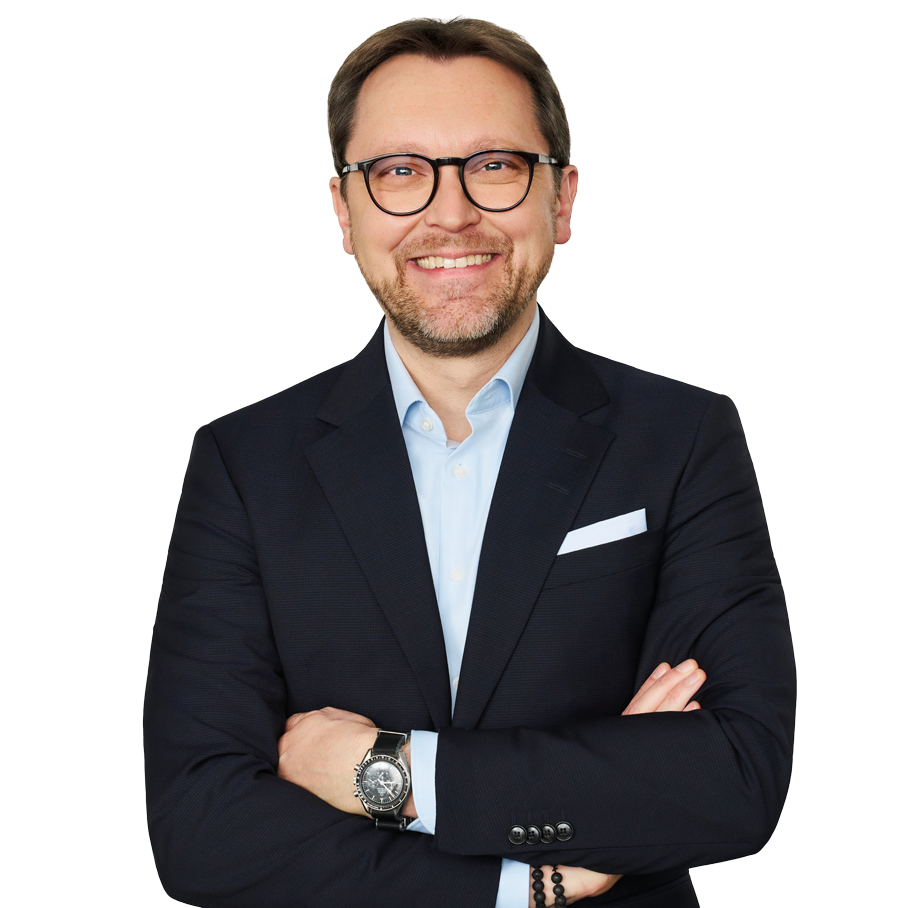
“Exhibitions are a people’s business.”
Stefan Rummel, CEO of Messe München
Live events and trade fairs have come back strongly since the pandemic ended. What are the advantages of in-person meetings from a business point of view?
Stefan Rummel: You can’t beat meeting someone in person. Trust is essential for creating long-term business relationships and, as a general rule, trust can only be built up by talking to someone face to face. And it’s not possible to explain complex products and solutions on a video call either. I’ve been able to observe again and again how the trade fair environment has helped to create a sense of community and spirit of optimism – both of which are essential, especially when markets are going through a challenging period.
How is the role of trade fairs changing today, in particular when it comes to digitisation, hybrid formats and visitor expectations?
Stefan Rummel: It’s clear what trade fairs are expected to deliver nowadays: they have to be the leading platform in their industry. And they have to be international and offer concrete answers to the most pressing issues facing the relevant sector’s future. The expectations of both the exhibitors and visitors are increasing all the time. They must know that it is worth their while to go there – and the trade fair must provide some obvious business benefits. Data and AI will help grow these in the future. Offering them an experience will play a key role here as well. Digital and hybrid elements can help augment their trade fair experience in some areas but the in-person meetings will continue to be a trade fair’s main feature. Exhibitions are a ‘people’s business’.
The subject of sustainability also plays a key role. And this is all the more true at a trade fair for environmental technologies. What concrete measures have you taken as far as sustainability is concerned?
Stefan Rummel: Sustainability is at the very core of our corporate strategy. It is our goal to be net zero across the whole of our business by 2050. This means that we will capture the same amount of greenhouse gases as we emit. To achieve this, we are systematically using renewable energy, operate one of the world’s largest rooftop solar panel systems and are driving forward waste prevention and the development of green areas.
IFAT Munich is the world’s leading trade fair for water, recycling and circularity solutions. How has this exhibition changed over the years, regarding its size and its content?
Stefan Rummel: Both the size of IFAT Munich and its content have undergone some big changes over the years. It has a history stretching back over 60 years and has transformed itself from being a specialist exhibition for municipal wastewater technology to the world’s leading platform for environmental technologies. Its focus nowadays is not only on water and wastewater but also on the circular economy, resource management, climate action and climate adaptation. At the same time, the IFAT has also physically grown: we are expecting over 3,200 exhibitors and more than 142,000 visitors from more than 170 countries this year. They will be occupying all 18 exhibition halls as well as our outdoor exhibition area – a total of around 300,000 square meters. In terms of surface area used, the IFAT is Munich’s second-largest trade fair after the bauma.

3,200
exhibitors

ca. 142,000
expected visitors
170
countries
What can we look forward to in 2026? Are there any new formats, key topics or digital services?
Stefan Rummel: IFAT Munich 2026 will further cement its role as the world’s leading trade fair for environmental technologies – from a professional, economic and political point of view – and as an integral part of the growing IFAT network across the globe. The large stages will be there again – i.e. our Blue, Orange and Green Stages – where top-class guests will be holding panel discussions. And then there’ll be a number of ‘Spotlight Areas’ dedicated to subjects such as textile recycling and ‘the water-conscious city of the future’. The complete programme can be viewed online. I can also warmly recommend our IFAT app.
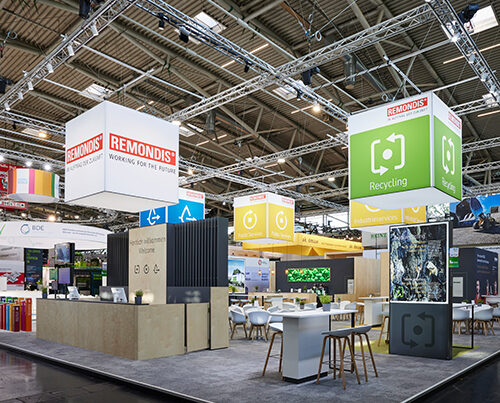
Having exhibited at the trade fair for many years now, the REMONDIS Group has its stand in Hall A6, where the majority of the exhibitors are recycling firms. The IFAT, however, covers a much wider range of topics than just recycling. Have you got a good tip for someone who’s visiting the IFAT for the first time or who’s looking for some new ideas?
Stefan Rummel: Over the last few years, it has become increasingly obvious just how important the link is between the water management and recycling sectors for promoting circularity. And so my tip would be – once you’ve taken a look at recycling – to visit the water and wastewater halls as well as the digital and automated solutions. And it’s also well worth visiting the Orange Stage and the live demonstrations in the outdoor area as the people there will not only be presenting and discussing their solutions but also showing how they are used.
Messe München
Being one of the world’s largest trade fair companies with 14 world-leading exhibitions and a total of around 90 exhibitions for investment goods, consumer goods and new technologies, Messe München is setting the benchmark for innovation, flexibility and networking. Its world-leading exhibitions – i.e. the world’s largest meeting point for the individual industries – also includes the IFAT.
To what extent does the IFAT see itself as being a driver of innovative environmental technologies?
Stefan Rummel: IFAT Munich is a key platform for innovations. Why? Because new technologies are not only presented here. Their practical use and their suitability for international markets are also discussed and assessed here. Indeed, having developers, users and decision-makers so close to one another enables innovations to be brought to market more quickly. This can be seen most clearly in the Spotlight Areas, where our partners provide valuable and interesting insights into current topics such as battery recycling, plastics recycling, digitisation in the water management sector, and hydrogen.
At the same time, we like to use IFAT Munich to encourage discussions between established businesses, start-ups and scientific institutes. Networking plays a key role in ensuring that innovations get to be used more quickly.
The IFAT is also a reflection of the challenges facing us today: the circular economy, the scarcity of resources, climate adaptation. What are the stand-out topics on the 2026 agenda?
Stefan Rummel: The leitmotif for IFAT Munich 2026 is ‘Circularity is a must’. This motto was also one of the reasons why we entered into a collaboration with the ‘Süddeutsche Zeitung’ newspaper as we both wish to grow awareness of the importance of circularity. For the first time, the editorial team will be planning parts of our stage programme at IFAT Munich. These sessions will be used to underline the fact that systematically implementing the circular economy is the central lever to mastering the scarcity of natural resources, the growing environmental requirements and the necessary restructuring of industrial processes.
Environmental challenges are global challenges. You’ve now established IFAT trade fairs all around the globe. Where can these trade fairs be found and what’s the strategy behind having a worldwide network?
Stefan Rummel: The global environmental challenges can only be solved at international level – and this is the approach of the global IFAT network. By holding our events, we help to promote the responsible handling of water and the development of well-functioning material life cycles. The network currently comprises twelve events on several different continents. We held our first trade fair for environmental technologies in the Middle East this January when we put on IFAT Saudi Arabia in Riyadh.
“The global environmental challenges can only be solved at international level – and this is the approach of the global IFAT network.”
Stefan Rummel, CEO of Messe München
What is it about managing one of the world’s leading trade fair companies that motivates you personally?
Stefan Rummel: One of the main motivations for me is the combination of the global impact and the very tangible customer benefits. Trade fairs are places where ideas are turned into business, where people, sectors and technologies meet and find solutions.
What’s your vision for Messe München in 2030?
Stefan Rummel: I see Messe München as being an even bigger global platform for driving growth in our core sectors in 2030. With strong world-leading trade fairs in Munich and a scalable portfolio in key markets abroad.
We will systematically think about our trade fairs from our customers’ perspective: transactions, leads, ROI and genuine business moments. At the same time, Munich will remain our anchor. International growth will strengthen our venue, attract new exhibitors and customers to Munich and make our company more resilient.
Image credits: image 1, 4: Adobe Stock: Yus; image 2, 3: Messe München