

When the dilapidated Rahmedetal Bridge near Lüdenscheid was closed to traffic from one day to the next in 2023 so it could be demolished, the A45 motorway – one of the most important motorway connections between the Ruhr region and the south of Germany – effectively came to a standstill. Long lines of noisy lorries were forced to take the detour, polluting the air as they travelled through Lüdenscheid and the neighbouring towns and villages. Rahmedetal became an embarrassing symbol for the criminal neglect of Germany’s infrastructure. But it is not just the country’s motorways, roads, railways and bridges that have been impacted by these years of neglect. Key services that local authorities must deliver have also increasingly been coming under strain over the years.
Local and district authorities are under huge financial pressure when it comes to both providing key services and tackling often long overdue infrastructure projects. The combination of demographic change and this investment backlog caused by strained finances has created a perfect storm for towns, districts and local businesses. And the challenges here are massive – whether it be digitisation, energy transition requirements and house-building projects or repairing transport infrastructure. No matter where you look, there is a lack of funds and, increasingly, a lack of qualified personnel as well.
The KfW Municipal Panel put the local authority investment backlog in 2024 at 215.7 billion euros – up 16% from the previous year. The main reason for this: the local authorities do not have the financial resources needed. While local authorities must provide 70% of public capital expenditure, they are directly entitled to around just 15% of taxes and similar levies.

Without the funds allocated to them from central government and the German states, local authorities would simply not be able to afford to carry out their duties. Their financial situation is now a permanently precarious one. Looking at the whole of Germany, the financial bottom line (i.e. revenue minus expenses) of local authorities currently shows a staggering deficit of 24.3 billion euros.
The KfW Municipal Panel put the local authority investment backlog in 2024 at 215.7 billion euros.
The private sector could help relieve and remedy this situation. Public private partnerships (PPPs) provide an opportunity to bring private sector capital and know-how into joint ventures to clear up the backlog of investments as well as to stabilise fees and charges over the long term.
Against this backdrop, KOWID (Centre of Excellence for the Public Sector, Infrastructure and Public Services) carried out a survey which saw it reaching out to all German towns and districts with more than 20,000 local inhabitants as well as to a fixed number of local authorities with between 10,000 and 20,000 local inhabitants in a selection of German states. They were asked about their current financial situation, investment requirements and attitude towards PPPs. The results clearly showed that the decision a local authority takes as to how it intends to maintain, modernise or extend its municipal infrastructure primarily depends on its financial situation. This, in turn, is directly impacted and dependent on the structure of the population and local businesses in the different areas.
An ageing population combined with a lower number of companies having to pay local business tax are already causing problems for many local authorities. New concepts are needed to ensure that the wide variety of tasks can continue to be delivered, in the same high quality, in the future as well.
The KOWID study has shown that public private partnerships are, in many cases, an option that local authorities could use to procure and implement their needs, to help share the burden of delivering the required infrastructure and to provide the right quantity and quality of services. PPPs can fundamentally help to ease the burden on local authorities and, in the best case, increase levels of efficiency for a range of public tasks. These include providing public infrastructure (e.g. in administration and transport), technical infrastructure and classic key public services (including waste and water management) as well as education and training.
STUDY
The study ‘Zusammenarbeit der öffentlichen Hand mit privaten Unternehmen durch ÖPP in der kommunalen Praxis’ (Collaboration between the public sector and private companies using PPPs as practised in municipalities) can be downloaded from KOWID’s website (German only).

INTERVIEW
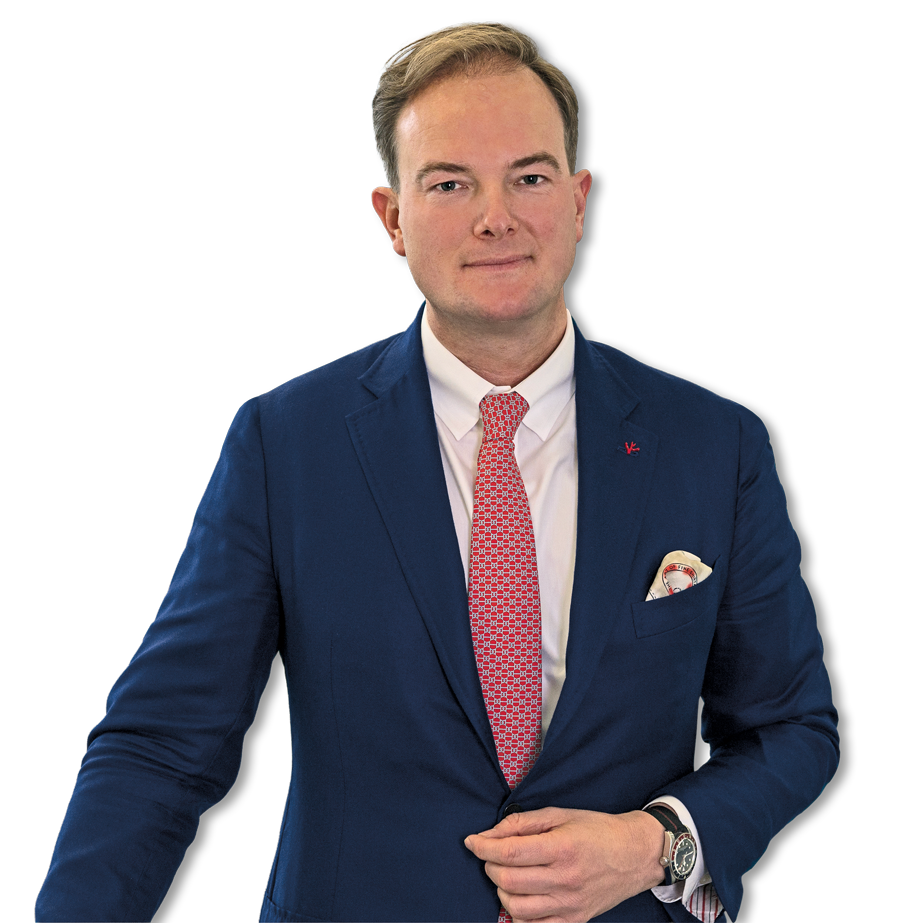
Dr Oliver Rottmann is an executive board member of KOWID (Centre of Excellence for the Public Sector, Infrastructure and Public Services) at the University of Leipzig and co-author of the KOWID study. During his interview with RE:VIEWS, he talked about the study’s findings and gave his assessment of the future prospects for public private collaborations.
Dr Rottmann, many local authorities are currently facing a massive investment backlog and financial constraints, caused for example by social costs, personnel costs and a need to renovate their schools, roads and networks. What role can a study, such as the KOWID Institute’s study ‘Collaboration between the public sector and private companies using PPPs as practised in municipalities’, play here in highlighting these challenges?
Dr Oliver Rottmann: The state of affairs in local authority budgets is dramatic right across the board. And the investments that local authorities need to make are massive at the moment. According to the KfW Municipal Panel, these requirements are growing every year and currently lie at around 215 billion euros. This can be put down to them having to handle a longer list of tasks, such as the green transition, housing policies, social payments, immigration etc. Local authority revenue is also lagging way behind this development. The current local authority deficit of over 30 billion euros reflects this problem. Having a more fitting distribution of the funds between the different federal levels would be appropriate but finding a suitable political solution here is unlikely to happen quickly. The metaphor of the ‘federal blanket’ – that the former Federal Finance Minister Peer Steinbrück occasionally used – describes this dilemma perfectly: one level either ends up with cold feet or with a cold face. And so, pressure on the finances and key services continues to grow. Procedural avenues can help in the short term to ensure key services are guaranteed and provided effectively and efficiently, especially when it comes to technical infrastructure, i.e. energy and water supply, and waste management and recycling.
The study wishes to help shed light on the ‘provision of municipal services’ as well as on all the different ways of doing this. And, by carrying out a survey of local authorities, it aims to reflect on the practical needs and experiences, not least with regard to collaborative models such as PPPs.
What was the main reason for carrying out the KOWID study and what were the principal questions?
Dr Oliver Rottmann: Looking at these times of tight budgets and the ‘Special Fund’ – which has not made its way “into the roads” yet – we wanted to use this study to point out the possibilities of also using private sector know-how. The financial restraints that local authorities are facing mean that PPPs could represent a way to implement infrastructure projects more rapidly and more cost-efficiently. At the same time, the local authority remains the owner of the infrastructure. Nothing is privatised. The main questions we asked were what infrastructure challenges they faced and whether they used PPPs. If the answer to this question was yes, we then asked which PPP models were used and what the results were. 92 German local authorities with more than 10,000 local inhabitants took part in the study.
So what experiences did the local authorities have that use PPPs, especially compared to the classic model of delivering the services in-house?
Dr Oliver Rottmann: Due to the tight constraints on local authorities, they named subsidy programmes, loan subsidies and municipal loans as being particularly useful financing tools in this study. Furthermore, municipal guarantees, project financing and financing via joint collaboration companies are also seen as being useful. As far as the PPP projects are concerned, the majority of the local authorities surveyed consider this approach to be ‘very useful’ or ‘somewhat useful’. In other words, the more experience they have of PPP projects, the more benefits they see. The areas where they fundamentally see a high potential for PPPs as a means of providing key services include construction as well as technical infrastructure such as energy supply, water and waste management. Of course, the pressure to act and the way projects are implemented differ from local authority to local authority. And, in many cases, the local authorities have their own utility companies that play a key role in delivering public services. But here too, PPPs and private sector service providers can help out by having partnership models that reflect the exact requirements. PPP models, therefore, often have the utility company as a shareholder and not just the local authority so that the model is a combination of the local authority, the utility company plus a private sector firm.

The investments that need to be made are massive at the moment – according to the KfW Municipal Panel, they are growing every year and currently lie at around 215 billion euros. This can be put down to the longer list of tasks, e.g. the green transition, housing policies, social payments, immigration etc.
Your study findings highlight the fact that PPP projects can help make these services more efficient and more market-oriented. What effect does this have on a local authority’s day-to-day business and how does this benefit local residents?
Dr Oliver Rottmann: The success of a long-term collaboration, such as a PPP, primarily depends on two things: firstly, the goals of the partners must be made compatible so that they are congruent. This means that the focus of the local authority on public welfare must not be allowed to clash with the profit orientation of the private sector partner. One of the reasons why this often works is because innovative, private sector firms operate more cost-efficiently and this leads to the local residents receiving a high quality of service.
To what extent can the levels of scepticism and reservation be put down to a lack of experience rather than a categorical rejection?
Dr Oliver Rottmann: Punctual deliveries, life cycle approaches, use of the private sector know-how and innovation potential, transferring risks to the private sector partner, being able to plan budgets well into the future. These are all the theoretical opportunities created by PPPs. It became clear during our study that local authorities with experience of PPPs considered the exchange of know-how and experience, the quality of the services, cost efficiency and innovations to be particularly important. Innovations and new technologies as well as the provision of staff by the private sector partner, however, also appeared to play a significant role here. Experience shows, therefore, that local authorities certainly recognise the benefits and opportunities of PPPs when they use such models.
Why do people often tend to consider public private partnerships and privatisation to be the same thing?
Dr Oliver Rottmann: PPPs and privatisation are often seen as the same thing due to a lack of knowledge or ideological motivation because private sector companies are involved in both cases. The key difference lies in who has the responsibility, control and ownership. The local authority has all three in a PPP; the private sector partner delivers the service – regulated in a contract for a specific length of time, which may also be a long period. What’s more, the majority of PPP models used by local authorities tend to be ownership models, where the local authority remains the owner of the infrastructure, for example in the area of construction. Most of the PPPs are purely cooperation and supply models when it comes to technical infrastructure, like energy supply, water and waste management. All in all, privatisation means that the state hands over its tasks, property and control. In contrast, the state keeps its responsibilities in a PPP and can make the most of its private sector partner and their know-how to provide the services.
What role does the experience of the public sector partner play in promoting trust in and acceptance of such models among policymakers and administrators?
Dr Oliver Rottmann: A key role. As the public sector can theoretically not become insolvent, one frequent argument against PPPs is that private sector firms can go bankrupt and so it would be better to keep the provision of the services in-house. Experienced, innovative companies that have been operating on the market for many years and have extensive know-how of how to provide their services can dispel these fears. Our study also shows that local authorities with experience of PPP projects appreciate this. Having said that, a PPP is always an individual decision that requires an a priori assessment as to which form of delivery can be expected to be the most sensible for each individual case.
You recommend in your study that local authorities should have both the statutory and organisational powers to decide for themselves about PPP instruments. What political or statutory framework conditions do you believe to be critical here?
Dr Oliver Rottmann: Alternative ways for organising and delivering infrastructure and public service tasks could be developed specifically for local and district authorities – especially in regions where it is no longer possible for public or entrusted municipal or private sector players to deliver the service across the region on their own. This could also include the question of whether the regulators – i.e. central government and the German states – can make the standards for public services more flexible in certain areas and can add ‘experimental clauses’ regarding how the services are delivered.
In your opinion, what would a pragmatic approach – one that is free of ideology – look like so that every infrastructure task is examined to see what is the best way to implement it?
Dr Oliver Rottmann: It is important to realise that a PPP is not a replacement financing arrangement but an organisational structure. Each case must be examined individually. A pragmatic approach free of ideology means: a PPP is neither a saviour nor the devil’s work. It is one of several options that must be examined case by case. In an ideal situation, PPPs can help make municipal services more efficient and more effective – especially at local authority level. The things that need to be taken into account and assessed beforehand are the complexity of the cooperation project, the quality of the services, the transfer of risk as regards liability, real competition and the innovative strength of the private sector partner. If all these points are met then there is much to be said for using a PPP.

“In an ideal situation, PPPs can help make municipal services more efficient and more effective – especially at local authority level.”
Dr Oliver Rottmann, Executive Board Member of KOWID e.V.
Delivering key public services is a joint task!
And the PPP study was a collaborative effort as well, having been carried out by the KOWID Institute in cooperation with numerous partners including the REMONDIS Group.
REMONDIS has been providing local authorities with its reliable support for many years, helping them to provide key services in the areas of recycling, public services and water. Our 70+ municipal partnerships deliver economic stability and long-lasting success and open up new avenues for a sustainable future. Further information about these collaborative business models and numerous reference projects can be found at (German only): remondis-kommunen.de

What role could public private partnerships play in the future in helping to master the challenges that local authorities face when delivering key public services?
Dr Oliver Rottmann: Local authorities are in a difficult fiscal position and, in most cases, do not have sufficient numbers of staff. And they don’t always have the know-how per se to provide specific services. Well-established, private sector infrastructure companies can provide them with support here. They can pool together the tasks and develop innovative set-ups, bring in their project expertise and carry out the tasks faster and in a more targeted manner. As a result, they can also take resilience and reliability into account, balance out the local authority’s staff shortages and have a financial impact if the local authority manages to save money by taking this step. In the area of construction, the general contractors can bring life cycle ideas into the projects so that infrastructure can be developed efficiently by a single company without having to award separate individual contracts.
A final question: what central message would you like to give as advice to the municipal decision-makers and politicians that have been fairly sceptical about public private partnerships to date?
Dr Oliver Rottmann: PPPs are always decisions that must be taken on a case-by-case basis. In light of the major investment challenges that local authorities find themselves facing, the call for the private sector to get more involved has got louder more recently and rightly so. The experiences with PPPs have definitely been positive. Which is why this supply option should also be considered in the individual cases being reviewed. The control, objectives and standards remain in the hands of the local authority – competent, private sector partners carry out the operations and deliver the services. They make it possible to have innovations, new technologies and approaches, digital and sustainable solutions and targeted operating models. What’s more, they can help local authorities to realise projects despite the lack of public sector personnel and know-how. Dismissing this procurement and supply option for purely ideological reasons is, therefore, not productive, especially considering the enormous infrastructure challenges faced by local authorities.
Dr Rottmann, many thanks for the interview.
Image credits: image 1: Adobe Stock: scusi; image 2: Adobe Stock: Irina Strelnikova; image 3, 4: © KOWID