

The lump of metal feels very cold when it is picked up. Just looking at it, it is not possible to see that this piece of aluminium was once waste: the recycled product TSR136 is so pure that it can be used immediately to make industrial products – further processing steps are not necessary.
Peter Flormann is proud of what has been achieved. He heads the Quality, Health, Safety and Environmental Protection department at the TSR Group, a REMONDIS Group company specialising in metal recycling. “TSR136 can be used as a raw material in high-quality applications, for example to make bodywork parts for the aerospace industry,” Flormann explained.
Using recyclate in high-tech applications – this is something that is still inconceivable in many sectors. TSR, however, has been pursuing a clear strategy for several years now, namely to produce the highest quality of recycled product possible from its scrap metal.
To do this, this REMONDIS subsidiary is looking to create close collaborations with industrial partners to close material life cycles in high-quality applications as well. TSR has already developed its recycled product TSR40 together with thyssenkrupp Steel.
An interview with Herwart Wilms, REMONDIS Managing Director and FEAD President
“When it comes to TSR40, we can guarantee that the quality parameters defined by our industrial partners will always be met. Using special measuring, detection and separation technologies, we can identify and remove pollutants during the production process as well as precisely define tramp elements, such as copper, nickel and chromium,” Flormann continued.
TSR40 is, therefore, a relevant alternative for making green steel using the direct reduction process. In the best case scenario, this manufacturing process – one that Salzgitter AG for example is looking to set up – will produce low-carbon steel using green hydrogen. It is still unclear today, however, exactly where the green hydrogen that industry needs should come from and who should pay for this costly source of energy. “TSR40 is an alternative means of decarbonising steel production and it is available here and now,” said Flormann.
“TSR40 is an alternative means of decarbonising steel production and it is available here and now.”
Peter Flormann, Head of QHSE – Quality, Health, Safety & Environmental Protection – at the TSR Group
Europe’s Clean Industrial Deal: A world leader in the circular economy?
Decarbonise industry to drive forward climate action and make European business fit for the challenges of the 21st century. This was and still is the aspiration behind the European Green Deal – that key industrial policy project set up by the EU Commission, which left practically no stone unturned during the last legislative term. This was then followed by the so-called Clean Industrial Deal (CID) last year, which does not question the goals of the Green Deal but does reinterpret them to reflect today’s greatly changed geopolitical situation.
Today more than ever, Brussels sees the transition towards a circular economy as being a cornerstone for driving innovation, employment and resilience. In its official papers, the Commission states a number of forecasts that the CID measures are expected to bring by 2030, including the creation of 500,000 new jobs and the value of the European remanufacturing market increasing to €100 billion. Growing the circular economy can make industrial production more resilient and more sustainable, speed up decarbonisation and secure supplies of raw materials.
As a result, the Commission is looking for its CID to make it a world leader in the circular economy by 2030. One key instrument to achieving this goal is the legislative act that it intends to pass this year: its Circular Economy Act. This should facilitate the free movement of circular products, recycled raw materials, and waste within the EU and simultaneously strengthen the demand for recycled materials.

According to forecasts, the value of the European remanufacturing market could increase to €100 billion and 500,000 new jobs be created by 2030.
Cutting dependence by limiting exports?
Closing more material life cycles – as TSR has done in its projects – is absolutely in line with the goals of the CID. Furthermore, the Commission wishes recycled raw materials, such as the products supplied by TSR, to reduce the dependency of European industries on the global market: i.e. material life cycles should, wherever possible, be closed within the EU – especially critical raw materials that are important for industrial policy.
The Commission has defined which raw materials are critical in its Critical Raw Materials Act. This list also includes aluminium. The Commission published its so-called RESourceEU Action Plan for aluminium and other critical raw materials at the end of 2025. This plan names a number of measures including restricting exports of scrap and waste from permanent magnets and aluminium.
These steps should also help reduce the dependence of European industries on aluminium imports. According to Eurostat, the EU imported aluminium articles worth €29.5 billion in 2024. The European Statistical Office has, therefore, put the trade deficit here at more than eleven billion euros – up by almost 30% compared to the aluminium imports in 2019.
During his discussion with RE:VIEWS, Peter Flormann said that he understood why the Commission had chosen to take this geostrategic policy. He also, however, stressed just how important it is to manage and control the material streams appropriately. “Aluminium is not simply aluminium and aluminium scrap is not simply aluminium scrap,” the metal expert explained. “Cast aluminium alloys are typically used to produce, for example, engine blocks and gearboxes,” Flormann continued. In all probability, however, the transition of the automotive sector towards e-mobility will lead to a drop in the demand for cast aluminium in Europe. “EVs don’t have engine blocks,” Flormann commented. As a result, European industry will need less cast aluminium. In contrast, car bodywork and window frames are made using wrought aluminium alloys that must satisfy more stringent technical requirements. “Our recycled products TSR130 and TSR136 meet these requirements and so they are in high demand as a raw material for industrial processes,” Flormann said.
It is not possible, however, to recycle cast aluminium materials into a wrought alloy. “A large number of cars with internal combustion engines will have to be recycled in the coming years. The sector will find it difficult to sell their cast aluminium materials if they are not allowed to export them.”
“If the EU decides to restrict exports of certain materials, then these restrictions must be based on the grades traded on the market.”
Peter Flormann, Head of QHSE – Quality, Health, Safety & Environmental Protection – at the TSR Group
What are ‘critical raw materials’?
According to the Critical Raw Materials Act (CRMA), a raw material is classified as critical if it reaches the thresholds for two main parameters:
High economic importance: the raw material is of key importance to the European economy, in particular to strategic sectors such as digitisation and the energy transition.
High supply risk: the supply of a raw material is at risk due to a high concentration of global production in just a few countries, low levels of substitution and low rates of recycling.
The following raw materials appear on the ‘critical’ list in the CRMA: antimony, arsenic, bauxite/aluminium oxide/aluminium, baryte, beryllium, bismuth, boron/borate, cobalt, coking coal, copper, feldspar, fluorspar, gallium, germanium, hafnium, helium, heavy rare earth elements, light rare earth elements, lithium, magnesium, manganese, graphite, nickel, niobium, phosphate rock, phosphorus, platinum, scandium, silicon metal, strontium, tantalum, titanium metal, tungsten and vanadium.
Recycled raw materials for a resilient industry
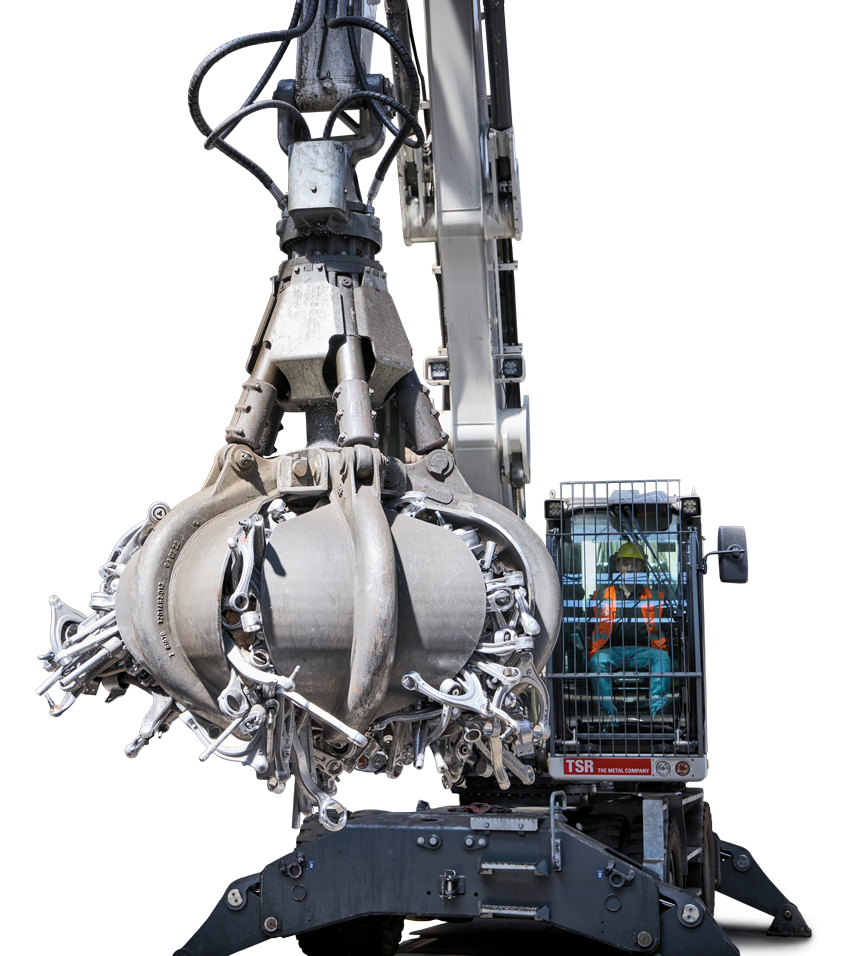
Steel also has different qualities or grades just like aluminium. Here, too, there are grades that are perfect for being used as construction steel but are absolutely unsuitable for higher-quality applications. “If the EU decides to restrict exports of certain materials, then these restrictions must be based on the grades traded on the market,” Flormann explained. And he continued: “These export restrictions must be accompanied by minimum recycled content mandates for recycled raw materials that have been ‘made in Europe’ to ensure the prices of the high-quality grades remain stable.”
At the end of the day, recycled raw materials that have been ‘made in Europe’ – like the TSR products – not only help curb climate change and conserve natural resources. They also minimise the risks of external shocks caused by a dependency on raw material imports and they increase supply security for local industry. According to scientists at the University of Applied Sciences Jena, the demand for recycled raw materials from the metal-processing industry will continue to grow over the coming years. They carried out a study last year that focused on Germany’s steel industry. Their findings showed that the volumes of scrap steel needed by the steelworks in Germany lay, on average, at 17.2 million tonnes between 2015 and 2023. The scientists have predicted that this demand will have increased to 27.6 million tonnes by 2045. In their summary, they write that the biggest expected growth in demand will be for high-quality scrap.
Better enforcement for more raw materials
However, if this growing demand is to be covered by ‘made in Europe’ recycled raw materials, then some fundamental changes need to be made to the way waste laws are enforced. “This is especially true for end-of-life vehicle – or ELV – recycling. For many years now, we have been seeing a big discrepancy between the number of vehicles that are deregistered and the number that are recycled,” said Flormann. Policymakers are well aware of this situation as well: on its website, the BMU [Federal Ministry for the Environment] writes that there are around 50 million cars registered in Germany at the moment. Approx. three million of these vehicles are deregistered for good every year – but between only 300,000 and 500,000 ELVs end up at recycling businesses. The remaining vehicles are exported as ‘used cars’. “Around 2.5 million vehicles disappear from the market every year and we’re not sure where they go,” commented Flormann, summing up the situation.
From a statutory point of view, there is a fine line between an ELV and a used vehicle but it is a significant one. Legally, a used car is classified as a product and covered by the free movement of goods rule, if it is roadworthy or has just a few small defects that can easily be repaired. In contrast, an ELV is classified by law as being a waste product.
Which means it is subject to the strict rules set out in waste laws, such as the End-of-Life Vehicles Regulation and the Regulation on Shipments of Waste, which stipulate, among other things, how such products may be exported and recycled. It is, of course, not always clear cut when a used car becomes an ELV. The regulations are to be tightened when the EU’s new End-of-Life Vehicles Directive comes into force, probably at the beginning of 2027. From this point onwards, people selling used cars must be able to prove that the cars they are selling are not ELVs. This proof must confirm that the cars are roadworthy – something that will also include having to present a certificate confirming this from an independent motor vehicle expert.
While Peter Flormann welcomes the tightening of the rules, he also stressed that these should be better enforced by the authorities. “Waste laws are not being sufficiently enforced here in Germany. The certificates are of little value if no one checks them,” the TSR expert said. “We will only be able to produce more high-quality recycled raw materials for our local industry here in Europe if the waste remains in the country.”
The difficult situation facing plastic recycling
However, ensuring Europe has a secure supply of materials does not just depend on metals and having access to critical raw materials. One of the world’s most important materials is plastic thanks to its excellent properties. Future markets – such as e-mobility, renewable energies, electronic devices and AI data centres – all need high-quality plastics. Without plastic, there can be no decarbonisation.
And yet plastics themselves have a big carbon footprint – at least they do when they are produced from virgin materials and then incinerated after they have been used just the once. New plastics are made from naphtha (produced from crude oil) and this is an energy-intensive process. “Using recycled plastic reduces energy consumption and is good for the climate as well,” explained Monica Harting Pfeifer, who works on developing plastic recycling at REMONDIS.
Energy will not be getting any cheaper and the dependency of the industries in the west on the arbitrariness of OPEC has often created challenges for local economies over the last decades. Using more plastic recyclate should, therefore, be of strategic interest to both European governments and the companies that process plastic in Europe. The European Commission has also recognised this challenge in its Green Deal and set blanket minimum recycled content mandates for plastic recyclate in, for example, its new Packaging and Packaging Waste Regulation (PPWR).
All of which should be creating a positive environment for the plastics recycling market in Europe – explaining why the industry has been moving forward with gusto and invested around five billion euros over the last few years to meet the requirements set out in the PPWR. REMONDIS has also further developed its processes to ensure it can match the increasing quality specifications for, for example, cosmetics packaging. And yet the market has found itself under pressure for months now. “For a while now, the ongoing pressure on prices has not only come from cheaper new products but also from recyclate imports from low-wage nations, and from ‘fake recyclate’,” Harting Pfeifer continued. Fake recyclate is what the recycling sector calls new products that are incorrectly sold as recycled material.
“It’s more expensive to produce plastic recyclate than it is to produce plastic from virgin materials – and this is especially true for high-quality plastic recyclate,” explained Harting Pfeifer. The reason for this is the higher costs, starting with the labour-intensive refuse collections and ending with the energy-intensive sorting and recycling processes. “On the other hand, recyclates reduce the costs externalised by the production of virgin raw materials,” Harting Pfeifer continued, i.e. the cost to the environment and the climate of extracting virgin raw materials; a cost that we must all pay.
E-waste: an urban source of raw materials
Many critical raw materials can be found in waste electrical and electronic equipment (WEEE), commonly referred to as e-waste. This category of waste is an important source of raw materials available in urban areas. The findings of the European research project ‘FutuRaM’ (short for ‘Future Availability of Secondary Raw Materials’) show that up to 29 different critical raw materials can be found in e-waste, weighing a total ca. one million tonnes.
Although these materials are extremely important for industrial production processes, they have yet to be sufficiently recovered from the e-waste. According to FutuRaM, approximately 0.4 million tonnes of critical raw materials were recovered from WEEE in the EU27, Iceland, Norway, Switzerland and the UK in 2022. The largest volumes recovered included aluminium and copper, while just small amounts of rare earth elements (such as neodymium and dysprosium), palladium and tungsten were extracted for reuse. The Commission believes, therefore, that recovering more critical raw materials from WEEE for its local industry is a key lever to increase supply security and reduce dependency on raw material imports.
The so-called ‘black mass’ generated from recycling batteries is also a waste product that contains many critical raw materials. It is, however, often exported to third countries for recycling – even though it is of strategic significance to the European battery recycling industry.
Germany’s Dual System scheme should actually ensure that it is economically viable to reuse this raw material but the pressure on brands and distributors is enormous. As global commodity markets make it difficult to balance out this disparity, the EU decided to secure the demand for recyclate by introducing minimum recycled content mandates in, for example, the PPWR.
Despite this, fake recyclate and imports of recyclate that has been produced in line with far laxer human rights and environmental regulations are jeopardising this attempt to secure demand and pulling the rug from under the whole of the plastics recycling market in Europe.
Some large market players have already shut down their plastics recycling operations in Europe over the last few months; many medium-sized and small businesses are fighting for their survival. Studies are already predicting that there will be a one million tonne shortage of high-quality plastic recyclate on the European market by 2030. The current crisis is more likely to increase this figure – and, as a result, put a well-functioning circular economy for plastics in Europe at risk.
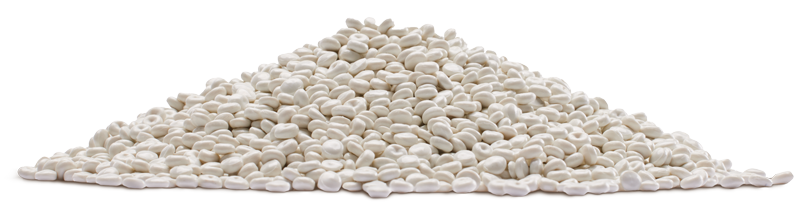
Studies are already predicting that there will be a one million tonne shortage of high-quality plastic recyclate on the European market by 2030.
This, however, is at odds with the goals set out by the European Commission. “Only recyclate that has been made in Europe can have a ‘sustainability guarantee’ and help reduce the dependency of European industries on raw material imports,” Harting Pfeifer stressed. Looking at the scheme that has been built up over the last four decades to solve the problem of the huge volumes of packaging waste, it is clear that the missing piece of the puzzle is having a steady demand for recycled products. “We have pointed this problem out to the EU and have also been calling on the policymakers in Berlin to take the necessary measures to ensure the statutory regulations strengthen the local circular economy,” Harting Pfeifer explained confidently. The EU wishes to mandate the use of plastic recyclate in other sectors, just as it has with packaging. The EU’s new End-of-Life Vehicles Directive, for example, stipulates that new cars must contain at least 15% recycled plastic from 2032 onwards and 25% from 2036.
In the best case scenario, these recycled plastics should come from European ELVs that have been locally recycled. Back at TSR’s branch in Duisburg harbour, Peter Flormann picks up a piece of TSR40 that has been made from recycling an old car. This cold and heavy lump of metal is used, for example, by thyssenkrupp Steel – just a few kilometres down the road – to make high-quality steel sheets that are then used by the automotive industry. A sustainable closed loop using recycled raw materials ‘made in Europe’ – an example that should find its way into the plastics sector as well.
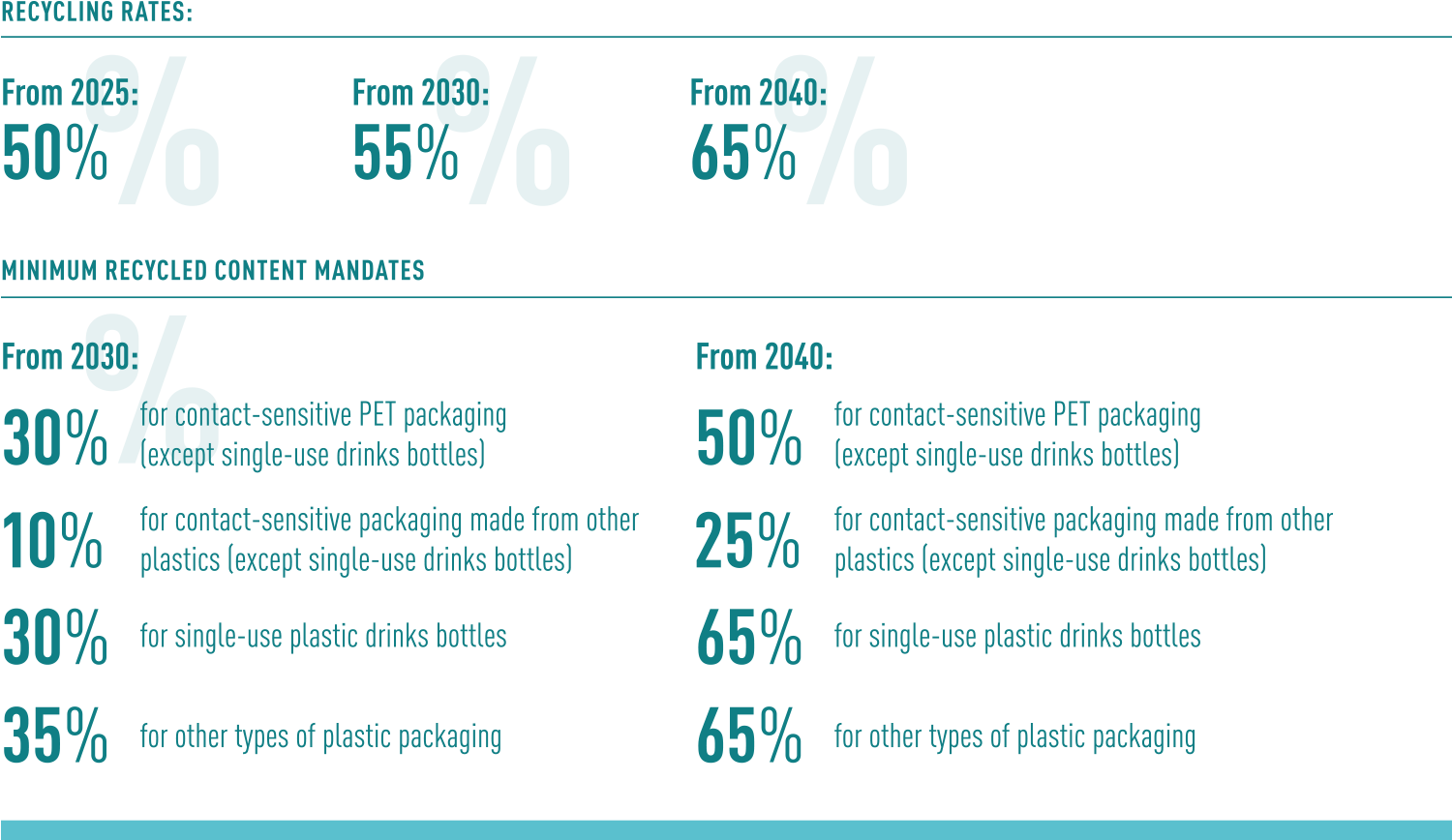
The PPWR rates
The following rates are set out in the EU’s Packaging and Packaging Waste Regulation (PPWR) and apply to the recycling of plastics and recycled plastic content:
An interview with Herwart Wilms, REMONDIS Managing Director and FEAD President
“We must strengthen demand”
The green transition is one of the key challenges facing European industry. The climate targets cannot be achieved without the circular economy. And yet the recycling sector – one of the main players in the circular economy – is finding itself having to deal with some major issues. We sat down with REMONDIS managing director and FEAD President Herwart Wilms to discuss the current state of the industry, the course that policymakers need to set and why European law should promote recyclate ‘made in Europe’.
Mr Wilms, you have been President of FEAD, the association of recycling trade associations and companies in Europe, since 01 January. Concerns are currently growing here in Europe about the competitiveness of local industry. What role does the circular economy still play in Europe and, indeed, for the EU Commission?
Herwart Wilms: Well, I would like to start by saying how positive it is that Europe wishes to continue to position itself as an industrial base and is looking to strengthen its industry. Measures have been taken – such as the Omnibus package – to reduce red tape. I see this as a positive move and hope that Europe will continue down this route – also when it comes to its new trade agreements like the one with Mercosur.
And I believe things are crystal clear as far as the Green Deal is concerned: none of the goals has been abandoned, in particular not the 2050 net zero target. This goal will only be able to be achieved if the circular economy is greatly expanded. The circular economy is one of the key cornerstones for reaching net zero. And then there are the geopolitical tensions. The circular economy can help here as well by making industry more independent and more resilient. The Draghi report has made it very clear where our weaknesses lie and where we need to do things better.
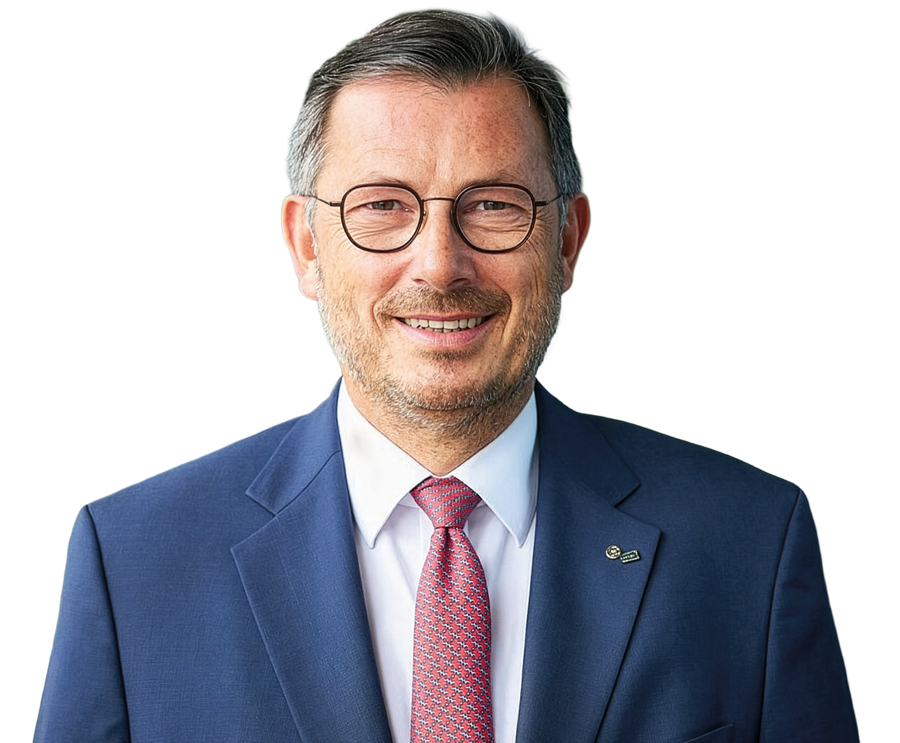
That all sounds optimistic. But, to have a well-functioning circular economy, we need to have a strong recycling industry. Things are not looking so good at the moment with some of the material streams – for example, plastics and metals. How does all this fit in with the Green Deal’s ambitious goals?
Herwart Wilms: That’s a fair question. The situation differs greatly across Europe. Plastics recyclers in Italy, for example, face major problems because there are no real markets there for selling their recyclate. This has led to large cities stopping their household collections of recyclable materials, which has had a catastrophic impact on recycling targets and city hygiene. In contrast, France rewards companies that use locally produced plastic recyclate by giving them a financial bonus and this strengthens the sales markets. A number of the large players here in Germany have closed their plants. The situation facing plastic recycling really is very serious at the moment.
What can politicians do to help here?
Herwart Wilms: There are a whole host of possibilities available to them. Let’s just take a look at the plastics tax: Germany pays around 1.4 billion euros to the EU every year because the system we have is not sensible enough to prevent the non-recycling of plastics. We have the knowledge needed to tackle this problem but the political will is not there at present.
How could the plastics tax be implemented then so that it really has the desired impact?
Herwart Wilms: Rather than sending taxpayers’ money to Brussels to pay for it – something that is not going to effect change whatsoever – the plastics tax could be passed on to producers. The 1.4 billion euros of taxpayers’ money could certainly be put to better use, for example as a bonus for using recyclate or recyclable designs. It’s all about motivating industry to produce more sustainably and, at the same time, ensuring it is implemented in an efficient and controllable way.
And then industry has been buying fake recyclate from Asia…
Herwart Wilms: The flood of new products currently being sold erroneously as recyclate in Europe is indeed a big problem. We need to get this situation under control. The EU Commission published its Winter Package before Christmas, in which it announced, among other things, that it intends to introduce a single market for recycled raw materials and customs codes for plastic recyclate. We believe, however, that a great deal more needs to be done to stabilise the plastics recycling market. There must be stable framework conditions in place for investments to be worth their while.
“We need a clear ‘Made in Europe’ clause to maintain the recycling capacities in the EU.”
Herwart Wilms, REMONDIS Managing Director and FEAD President
So what do you still need?
Herwart Wilms: Recycled plastic that is used to meet the EU goals should come from post-consumer waste that has been collected and recycled here in Europe. We need a clear ‘Made in Europe’ clause to maintain the recycling capacities in the EU.
Would such a ‘Made in Europe’ clause be in keeping with commercial law?
Herwart Wilms: We believe so. FEAD is calling for a number of things including increasing the circular material use rate to at least 25% by 2035. A clear regulation prescribing the use of recyclate from the EU could help to stabilise the market and promote the circular economy. What’s important is that this recyclate comes from household collections and has been put through a sorting process. Mirror clauses must also be added for imports to make sure that imported recyclate meets the same standards as locally produced materials and a bonus can be introduced for using locally produced recyclate – like they do in France – to grow demand.
What possibilities are there, in your opinion, to stimulate demand for recycled products?
Herwart Wilms: Industry is a key customer for recycled raw materials. Another is the public sector. According to the official procurement statistics published by the Federal Ministry for Economic Affairs, almost 190,000 public contracts worth approximately 132 billion euros in total were awarded in 2022 alone. Central government, the German states and district authorities are by far the most important clients when it comes to civil engineering projects. It must be possible to use this lever to preserve natural resources and strengthen the circular economy.
Why hasn’t this already happened? Is public procurement law hindering this in some way?
Herwart Wilms: A lot is already possible today with the current public procurement law. But the legal situation is too complicated for many of the people working in the councils and authorities. They are generally not experts in public procurement law. When in doubt, therefore, they choose the option that they believe is absolutely in keeping with the law.

According to the official procurement statistics published by the Federal Ministry for Economic Affairs, almost 190,000 public contracts worth approximately 132 billion euros in total were awarded in 2022 alone.
And this would be awarding contracts with price being the only award criterion?
Herwart Wilms: Precisely. Which is why we need to make it as easy as possible to award public procurement contracts correctly and sustainably.
You’re alluding to the recycling label here …
Herwart Wilms: Having a uniform recycling label would be ideal. It could set clear standards that would apply to all products. Such a label would help public sector buyers to recognise which products are sustainable so they can make a conscious decision to purchase them. This would trigger a strong demand for recyclate and incentivise industry to invest in sustainable production.
So, if we were to look ahead positively: what would your ideal framework conditions for the circular economy look like in 2030?
Herwart Wilms: We must strengthen demand, for example by having bonus systems that reward sustainable production methods. At the same time, we have to make sure that the laws we do have are actually implemented and enforced.
Extended producer responsibility is also a key point here. Producers must finance systems that also function well in times of fluctuating raw material prices. What’s more, they must also be held more accountable for designing their products so that they are recyclable. The EU is heading down the right path here, for example in the area of textiles.
What must an EPR system actually do then in the textile sector?
Herwart Wilms: It must, above all, ensure that producers are responsible for their products along the whole of the life cycle. This means that they must not only pay for the production of their textiles but also for collecting and recycling them. Put in concrete terms, this means that such a system must have the financing required to set up collection and sorting structures that enable textiles to be collected from households and sorted – and also when there are greatly fluctuating raw material prices and when demand for recycled materials may be low.
Another important point here is ‘Design for Recycling’. As the name implies, producers must design their products so that it is as easy as possible to recycle them once they reach the end of their useful life.
Can you give an example of this in the area of textiles?
Herwart Wilms: There are production methods, for example, that can be used to make elastic textiles without elastane. This system is more expensive but elastane makes it more difficult to recycle the product. An EPR system must create clear incentives to promote both sustainable production methods and the use of recycled materials.
The circular economy should also provide local industry with a secure supply of raw materials so that firms are less dependent on suppliers from, for example, China. Where do you stand on the current discussion about restricting exports of metals, such as aluminium?
Herwart Wilms: Export restrictions are a major market intervention and so this must be thought through very carefully. Let’s take aluminium as an example here. Policymakers must differentiate between cast and wrought alloys. If the current value chains are to be maintained then it is vital that exports of cast alloys can continue because the electrification of vehicles will result in a huge drop in European demand for cast aluminium parts. If this doesn’t happen then the actual demand for this material will not be high enough for this scrap to be recycled in Europe. Possible export restrictions, therefore, should – at most – apply only to wrought alloys as there is demand for this material in Europe.
What could a solution look like that reduces the dependency of local industry on critical raw materials from abroad without putting the recycling sector at risk?
Herwart Wilms: We must create a situation where the demand for recycled materials is so high that it makes the price of recycling cost-effective and provides an incentive to invest in advanced recycling technologies. Any possible export restrictions must, for example, also include minimum recycled content mandates for products.
Mr Wilms, many thanks for the interview.
Image credits: image 1: Adobe Stock: klyaksun; image 2, 5, 6: © REMONDIS; image 3: © TSR; image 4: Adobe Stock: digitalstock