
Wirtschaftsbetriebe Kreis Coesfeld GmbH (WBC) and the city of Lüdinghausen have once again awarded REMONDIS Münsterland GmbH & Co. KG the contract for the collection and transport of household waste in the district of Coesfeld. The new contract will begin in 2027 and will run for seven years, ensuring reliable waste disposal in all municipalities in the district.
The tender and contract was carried out in close coordination with all cities and municipalities of the district. The scope of services includes the collection and decommissioning of residual waste, organic waste and waste paper as well as the territorial collection of green waste and bulky waste.
District administrator Dr. Christian Schulze Pellengahr emphasises that the intercommunal cooperation in the district of Coesfeld has proven itself again. With increasing requirements for waste management and complex legal requirements, it is important to jointly develop reliable and economic solutions that guarantee citizens a safe and cost-efficient waste disposal.
Common projects
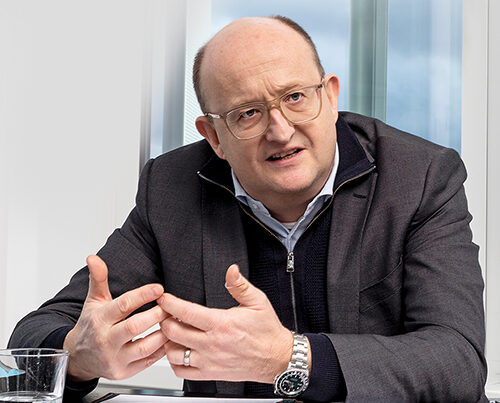
Thorsten Feldt, managing director REMONDIS Region West, says:
“The district of Coesfeld is one of REMONDIS’ longest-standing contractual partners. Many technical innovations, such as the introduction of side loader technology in Germany, originated here. The first digital recycling centre operated by REMONDIS also opened in Coesfeld in 2023. We look forward to continuing this successful collaboration and working with our trusted partner to shape the innovations needed for the future.”
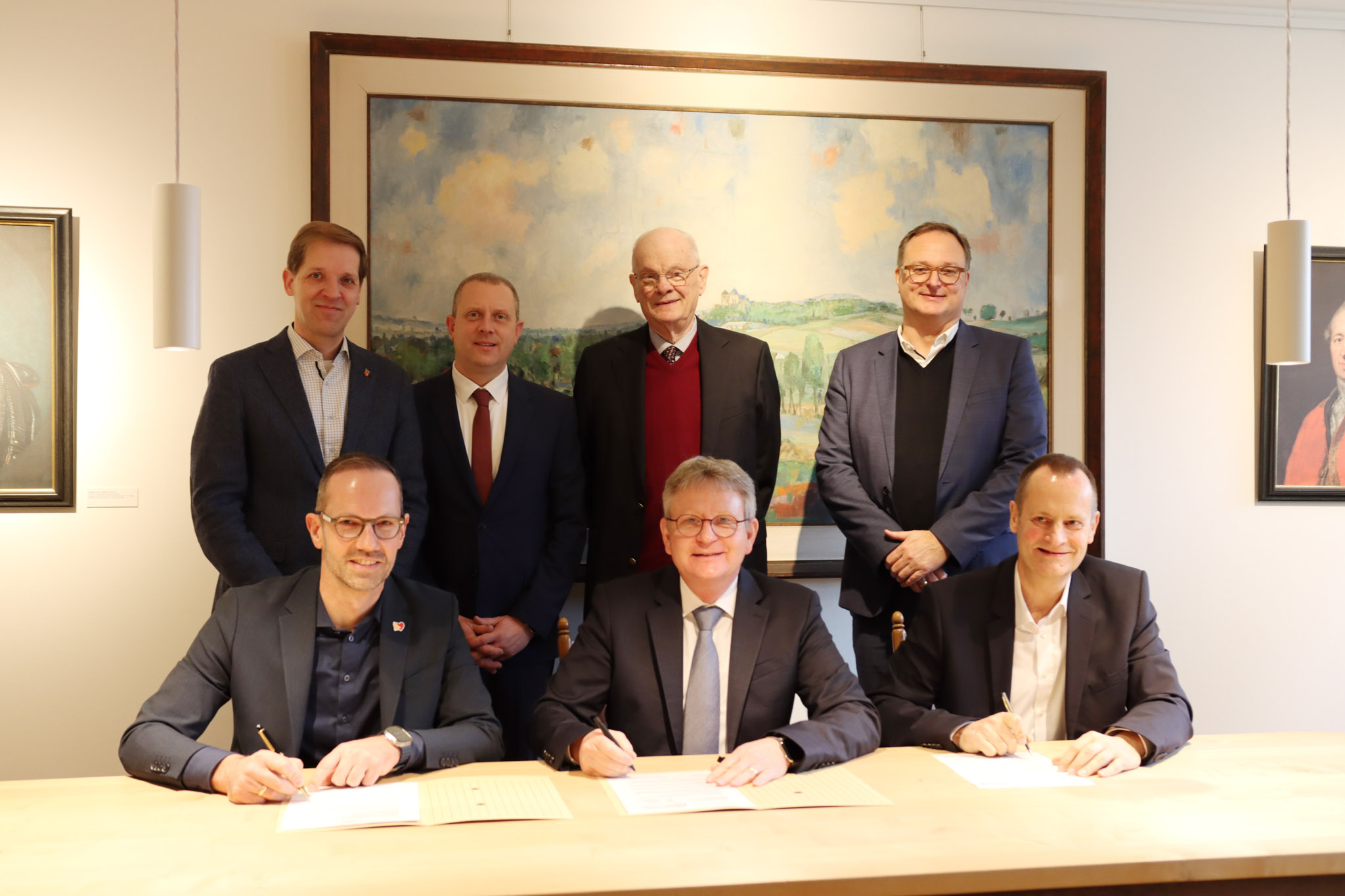
Standing from left to right: District Administrator Dr. Christian Schulze Pellengahr, Tobias Stehling (Management REMONDIS Münsterland GmbH & Co. KG), Norbert Rethmann (Honorary Chair of the Supervisory Board of the RETHMANN Group), Thorsten Feldt (Managing Director REMONDIS Region West); Sitting from left to right: Ansgar Mertens (Mayor Lüdinghausen), Stefan Bölte (Managing Director WBC), Peter Brunsbach (Management REMONDIS Münsterland GmbH & Co. KG)
Cleanliness standards for disposal vehicles
Municipalities and public institutions are subject to the Law on the Procurement of Clean Road Vehicles (SaubFahrzeugBeschG), which requires contracting authorities to comply with binding minimum quotas for the procurement of low-emission and zero-emission vehicles since 2021. For waste disposal this means that when awarding appropriate services or procuring new disposal vehicles, the requirements for compliance with cleanliness standards must be met.
“For the years 2026 to 2030, the legal framework provides for a quota of 15 percent of low-emission trucks. However, in close coordination with the cities and municipalities in the district of Coesfeld, we deliberately set a significantly higher minimum quota of 30 percent in the tender,” explained Stefan Bölte, managing director of WBC. “In this way, we are setting a clear signal for climate protection and are already creating the basis for sustainable waste logistics today.”
Practical experience with low-emission vehicles
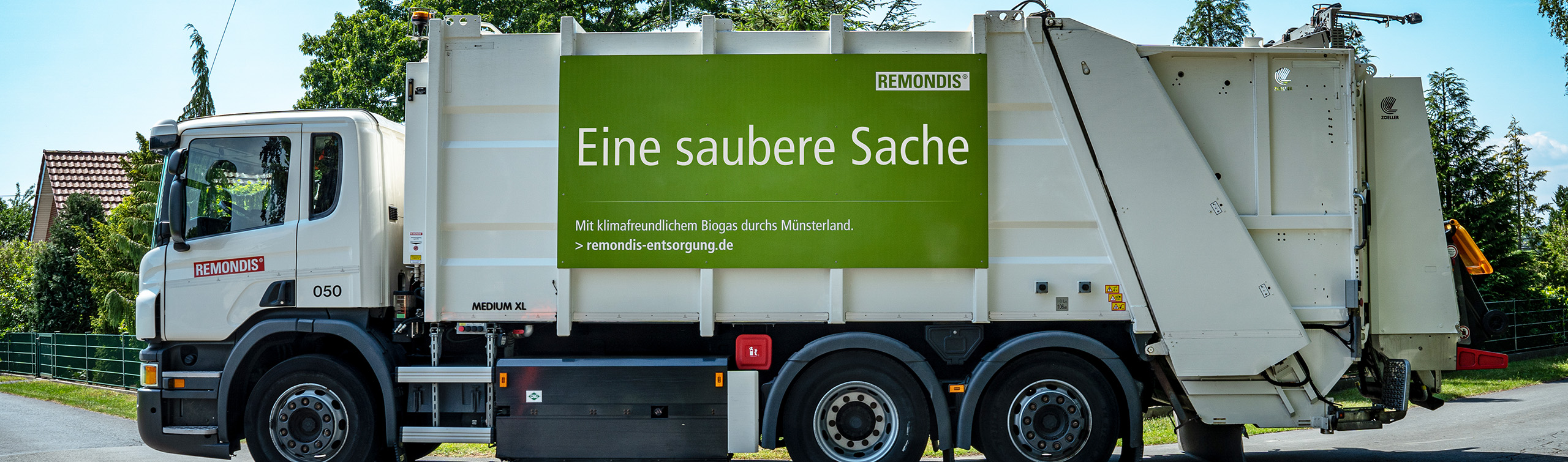
Peter Brunsbach, managing director of REMONDIS Münsterland GmbH & Co. KG, hereby refers to the already existing practical experience of the company with low-emission drives. REMONDIS is already using waste collection vehicles with biomethane drive in the district of Coesfeld – currently 21 vehicles of this type are already in use, explains Brunsbach, and adds that the fleet is to be continuously expanded in the coming years. The statutory minimum quotas for low-emission vehicles applicable for the period up to 2030 would thus already be met today.
Image credits: image 1: © REMONDIS; image 2: © Kreis Coesfeld