
Over 300 guests at the REMONDIS Forum in Hagen
“Innovation – Sustainability – A Strong Society & Economy”. This was the motto of this year’s REMONDIS Forum, which was held in the German city of Hagen in September. REMONDIS Aqua invited over 300 guests from the worlds of politics, business and science to join them at the event to discuss the subject of sustainability and take a look at the future of the water and recycling industries. The topics and speeches held at this year’s forum focused on the current challenges caused by the rapid advances being made in the field of technology. Climate change was also discussed as were the subjects of raw material supplies and the provision of drinking water and energy.

If all the sewage sludge in Germany were used as a source of energy, it could cut CO2 emissions by ca. 1.6 million tonnes a year
Global challenges affecting local communities
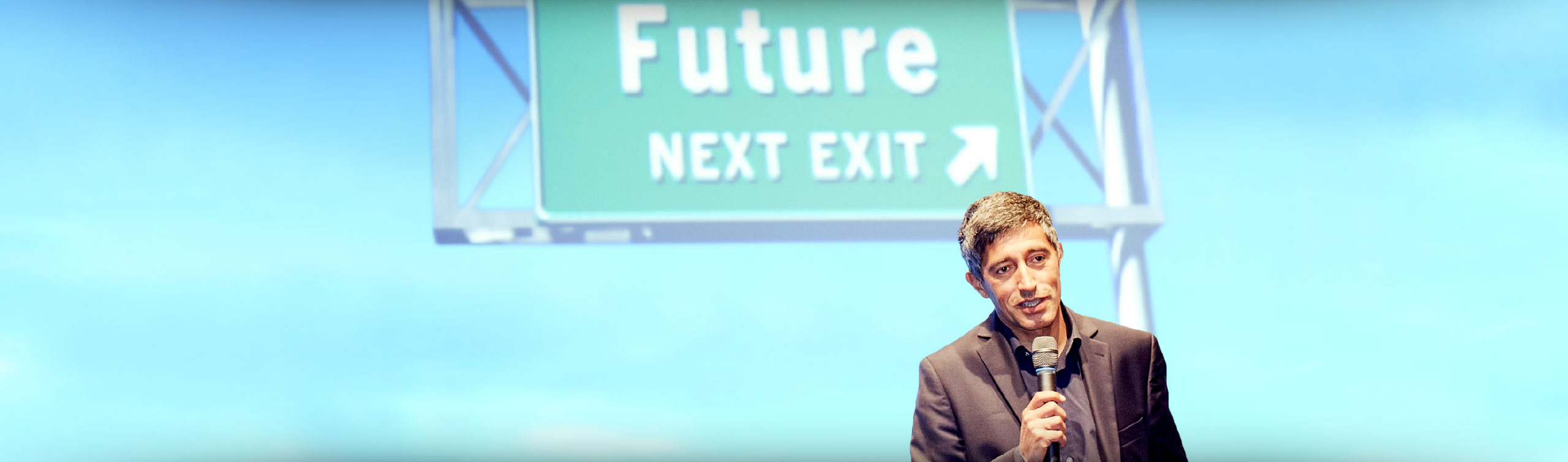
Considerable time was spent debating about the significance of technical and structural innovations with regard to sustainability. Having a guaranteed supply of raw materials is essential for an industrial country such as Germany and this fact played a significant role in the discussions. Guest speakers at the 2015 REMONDIS Forum included the well-known science journalist, Ranga Yogeshwar, Prof. Eckard Minx, board spokesman of the Daimler and Benz Foundation, as well as the chairman of the German Advisory Council on the Environment (SRU), Prof. Martin Faulstich. Klaus Jürgen Maack, former managing director of the lighting manufacturer ERCO, explored this subject from the point of view of a producer.
Sewage sludge: a source of energy and raw materials
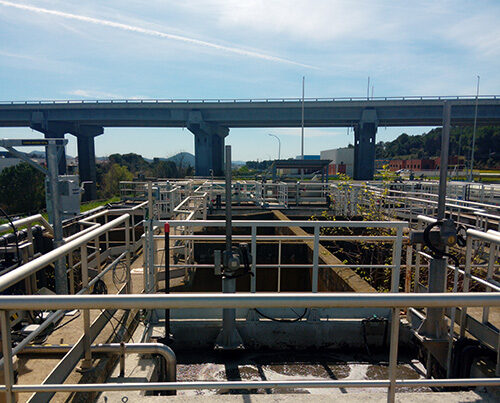
Ralf Czarnecki, head of material flow management at REMONDIS Aqua, described the new directions that the water industry was heading in. Here, he primarily focused on sewage sludge as a valuable resource and source of energy. 45 to 75 percent of dried sewage sludge comprises organic substances which can be used to generate energy. Looking at the total amount of sewage sludge produced in Germany, this source of energy could – were it to be used to its full potential – reduce carbon emissions by around 1.6 million tonnes a year. Phosphate makes up approx. 5 to 10 percent of dried sewage sludge and is, as far as REMONDIS Aqua is concerned, a sustainable source of recycled phosphorus. Were the most to be made of this source, then 90,000 tonnes of P2O5 could be recovered and reused every year.
Andreas Bankamp, Managing Director of REMONDIS Aqua, was pleased to hear the positive feedback from the guests attending the REMONDIS Forum, one of the biggest events held in Germany to focus on water and sustainability
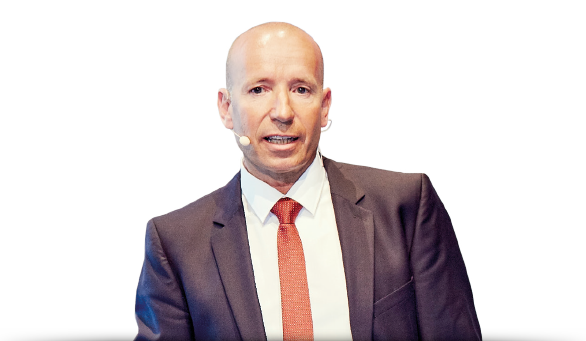
Ralf Czarnecki, Head of Material Flow Management at REMONDIS Aqua, held a talk on sewage treatment plants and the possible ways of recycling the valuable sewage sludge
A catalyst for innovative solutions
The 10th REMONDIS Forum was held in the German state of North Rhine-Westphalia for the first time. The reason behind this decision was REMONDIS’ shareholding in ENERVIE – Südwestfalen Energie und Wasser AG, a company based in Hagen that supplies energy and water to the region. REMONDIS Aqua has owned shares in ENERVIE since the middle of 2014. Andreas Bankamp, managing director of REMONDIS Aqua commented: “The forum provided an ideal platform to exchange information with each other and find ways to further develop the areas of supply and energy.”
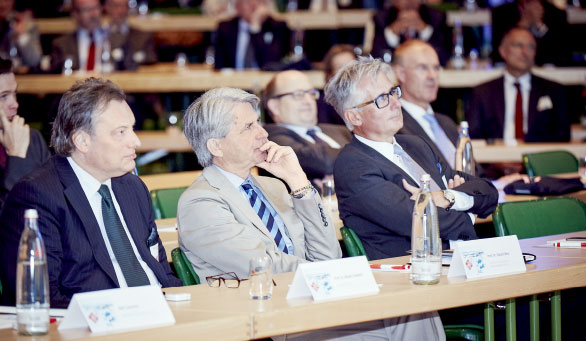
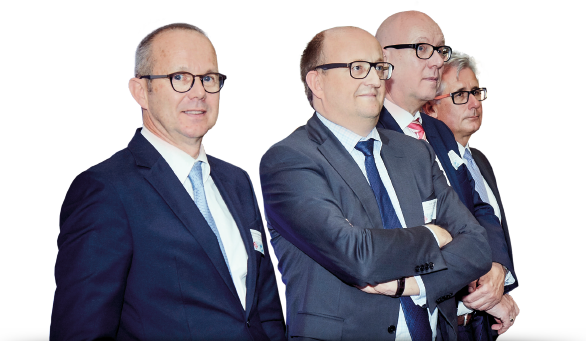
Interested listeners: Prof. Martin Faulstich, Prof. Eckard Minx and ENERVIE Chairman Wolfgang Struwe at the REMONDIS Forum in Hagen (from left to right)
Image credits: @Remondis