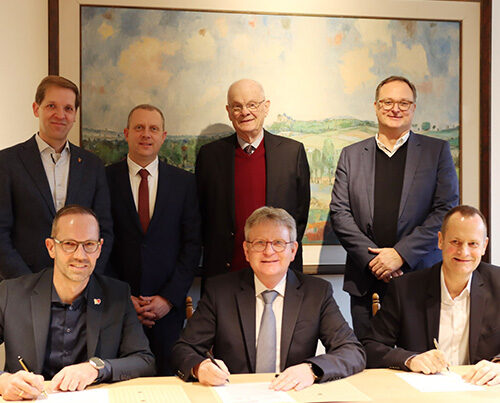

The transition towards low-emission mobility cannot be achieved alone. Companies are needed that are prepared to work together to take on responsibility and set up the infrastructure required. REMONDIS Münsterland and AGRAVIS Raiffeisen AG are a great example of this: these partners have now opened up a new bio-CNG filling station – enabling refuse collection vehicles run on alternative fuels to be deployed more efficiently. An example that clearly demonstrates how regional collaborations can simultaneously drive forward both the development of the circular economy and the green transition in the mobility sector.
REMONDIS Münsterland took on a pioneering role five years ago when the City of Münster began using collection trucks run on biogas to empty its recycling bins. More than twenty climate-friendly collection vehicles can now be found on the roads in Münster and the District of Coesfeld. AGRAVIS Raiffeisen’s new bio-CNG filling station in Münster has brought about a big improvement to the infrastructure needed for these trucks. REMONDIS is one of the main customers to first use this filling station.
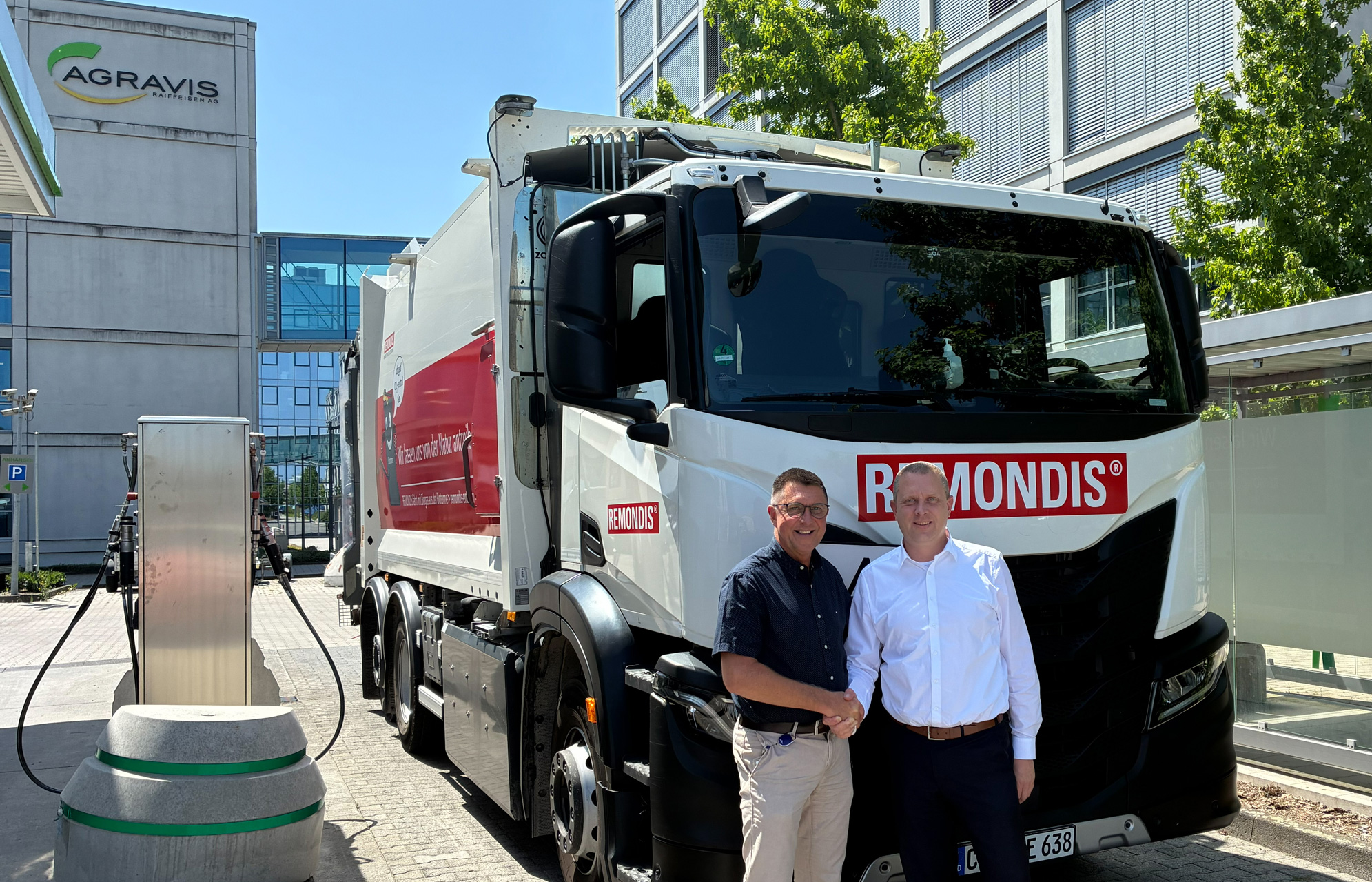
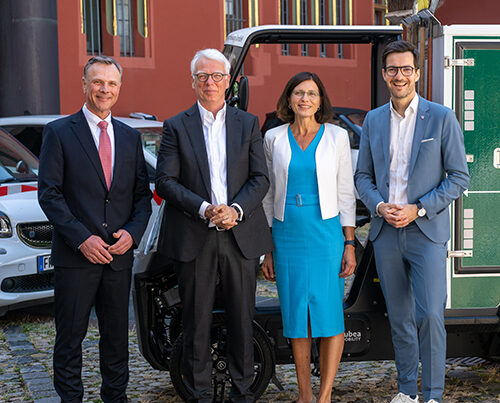
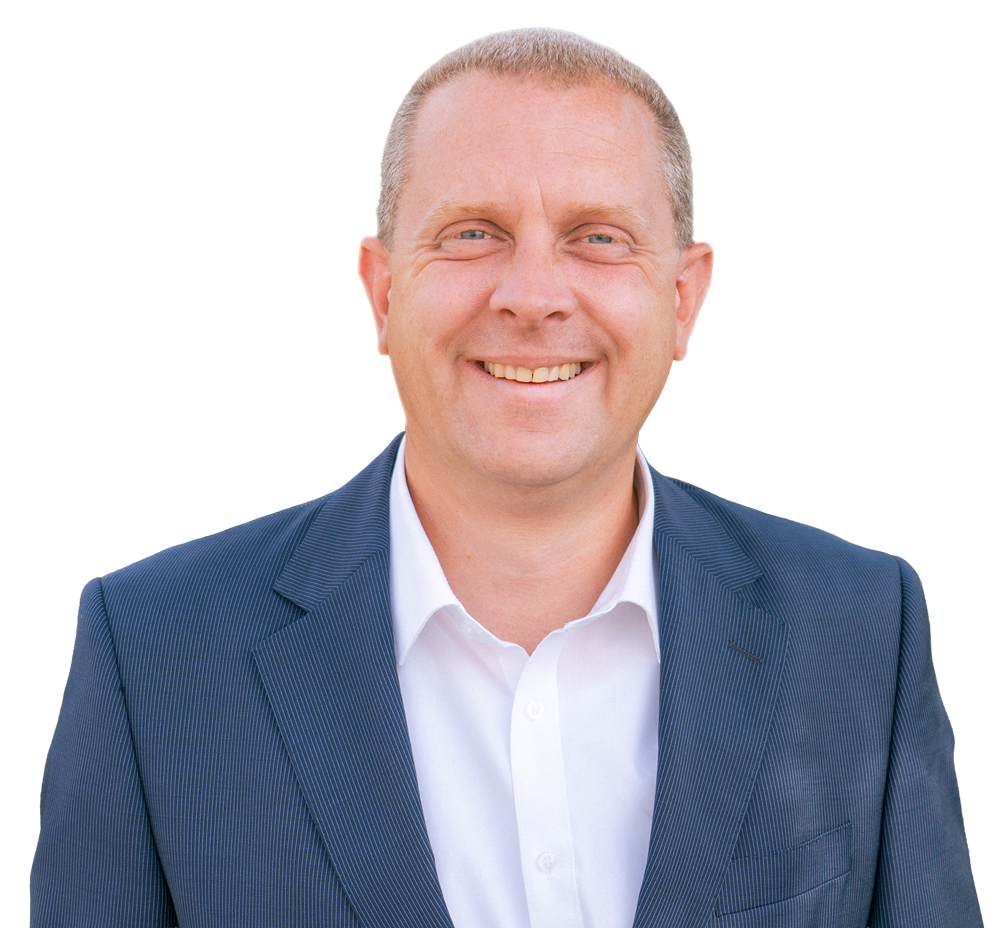
Thomas Erkert, AGRAVIS Raiffeisen Tankstellen GmbH, and Tobias Stehling, manager for the Münsterland region at REMONDIS, agree that regional partnerships help to advance the circular economy
“There are a whole host of advantages to using biogas as a fuel,” explained Tobias Stehling, manager for the Münsterland region at REMONDIS. “The additional costs lie at between just five and ten percent compared to trucks run on conventional fuels. Which means we can help make recycling bin collections more sustainable even without the state grants.” The fuel used in these trucks is bio-compressed natural gas (bio-CNG) – a fuel that is produced exclusively from organic waste and other residual materials. Seven biogas vehicles are currently being used to empty the recycling bins in Münster.
“The additional costs lie at between just five and ten percent compared to trucks run on conventional fuels. Which means we can help make recycling bin collections more sustainable even without the state grants.”
Tobias Stehling, manager for the Münsterland region at REMONDIS
Faster filling times
The methods used previously to refuel the vehicles in Münster was, however, certainly not ideal. While the District of Coesfeld already had a filling station that catered specifically for commercial vehicles, the trucks in Münster were forced to use the car fuel pumps. The result: long filling times and waiting times – up to 20 minutes were needed until the next vehicle could use the pump. Thanks to AGRAVIS’ new bio-CNG filling station, this problem is a thing of the past. Now it takes just three to four minutes to fully refuel a truck. At the same time, this new infrastructure has improved the conditions for other regional companies looking to move their fleets over to biogas. This project has shown how close collaboration work between infrastructure and fleet operators can create sustainable solutions that benefit the whole of their region.
AGRAVIS believes there is great potential here as well. “Both bio-CNG and bio-LNG benefit from the statutory regulations aimed at cutting GHG emissions in the transport sector and are, for example, not subject to the carbon levy. What’s more, we are also far less dependent on the fluctuations in the international energy markets. This is a big advantage – especially compared to diesel and indeed electricity,” said Thomas Erkert from AGRAVIS Raiffeisen Tankstellen GmbH.
As far as Erkert is concerned, therefore, neither bio-CNG nor bio-LNG are interim technologies but rather important components of the green transition in the mobility sector. These fuels are available now, offer an attractive cost-effective option and enable companies to become more sustainable without having to reduce their efficiency levels. Companies with predictable driving patterns – such as forwarding agencies, municipal fleets, recycling firms and agricultural businesses – can benefit, in particular, from this technology.
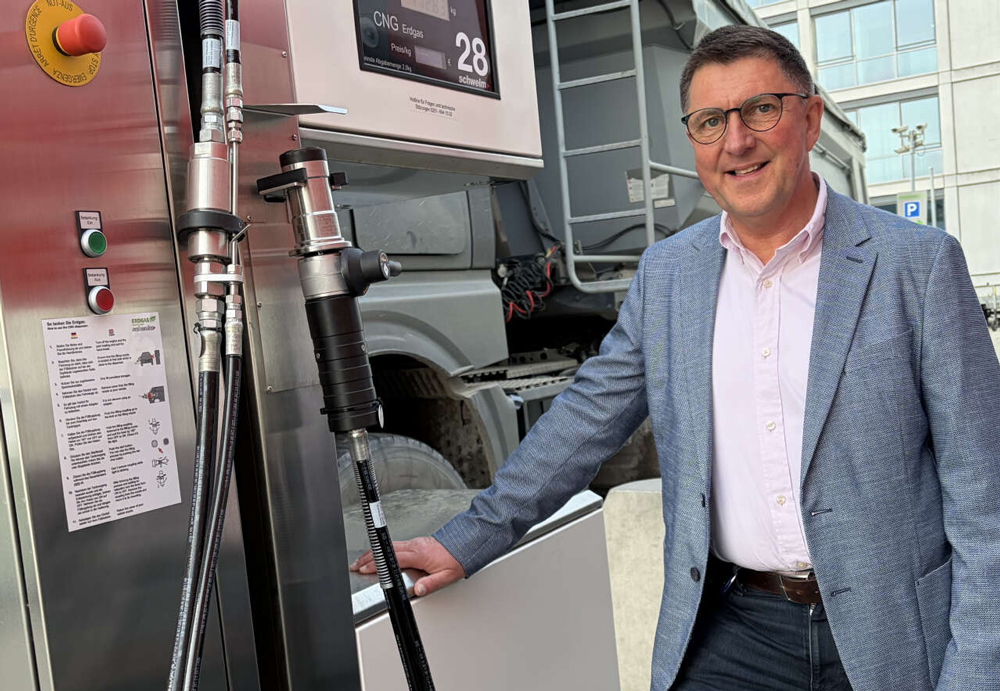
Thomas Erkert, AGRAVIS Raiffeisen Tankstellen GmbH, at the new bio-CNG filling station for lorries
Taking sustainability to the next level
REMONDIS Münsterland also believes that biogas is an important component for achieving a sustainable circular economy. Its goal is not only to ensure recyclable materials are reused for as long as possible but also to make the collection of these materials as green as possible.
Having said this, however, Tobias Stehling is critical of the way lawmakers currently assess the various fuels and technologies. “The carbon thresholds set for fleets of vehicles only take the vehicles’ emissions into account. They ignore the fact that the carbon emitted by bio-CNG is the carbon captured beforehand by the plants, creating an almost fully closed carbon cycle,” he explained. He believes the different way HGV tolls are handled is also a subject for debate.
Irrespective of this, however, REMONDIS Münsterland intends to continue down the path it has taken. Six further biogas trucks will soon be joining its fleet and replacing conventional diesel vehicles – helping to take a further step towards setting up an even greener recycling bin collection scheme.

Image credits: image 1: Adobe Stock: comicsans; image 2, 3: © REMONDIS; image 4: © AGRAVIS