

Having a coffee, grabbing a quick bite to eat and finding the right gate in time for boarding: anyone travelling through an airport usually has a lot on their mind, but proper waste sorting isn’t one of them. A waste sorting system on site must therefore be simple and intuitive to use. Eindhoven Airport has addressed this issue and will be doing away with the traditional waste bins in the terminal in future. Together with REMONDIS, the airport is introducing a waste sorting system designed on the basis of what travellers actually throw away. Site-specific imagery, separate collection of food waste and regular waste scans are intended to reduce incorrectly sorted waste and keep the recyclable fractions cleaner.
“Waste sorting must be clearly recognisable at a glance. By using photos of waste that people are actually throwing away, we make it as easy as possible to make the right choice.”
Roger Versluis, Regional Manager South at REMONDIS Nederland

An airport without residual waste
In the past, due to unclear signage, recyclable materials regularly ended up in general waste. At the same time, separately collected waste streams – including plastic packaging, drinks cartons, and paper and cardboard – were contaminated by other waste.
On behalf of Eindhoven Airport, REMONDIS investigated exactly what types of waste are actually generated at the airport. The findings of this study were directly incorporated into the design of the new waste bins. Travellers will no longer find abstract symbols or descriptions on them, but rather specific items of waste encountered at the airport, such as luggage tags. Such examples are depicted on interchangeable stickers. This means the images can be quickly adapted if surveys show that travellers do not understand a particular label or if the quality of waste sorting changes. Furthermore, food waste can now be disposed of separately. This is intended to prevent other recycling streams from being contaminated by food waste, which is mostly liquid.
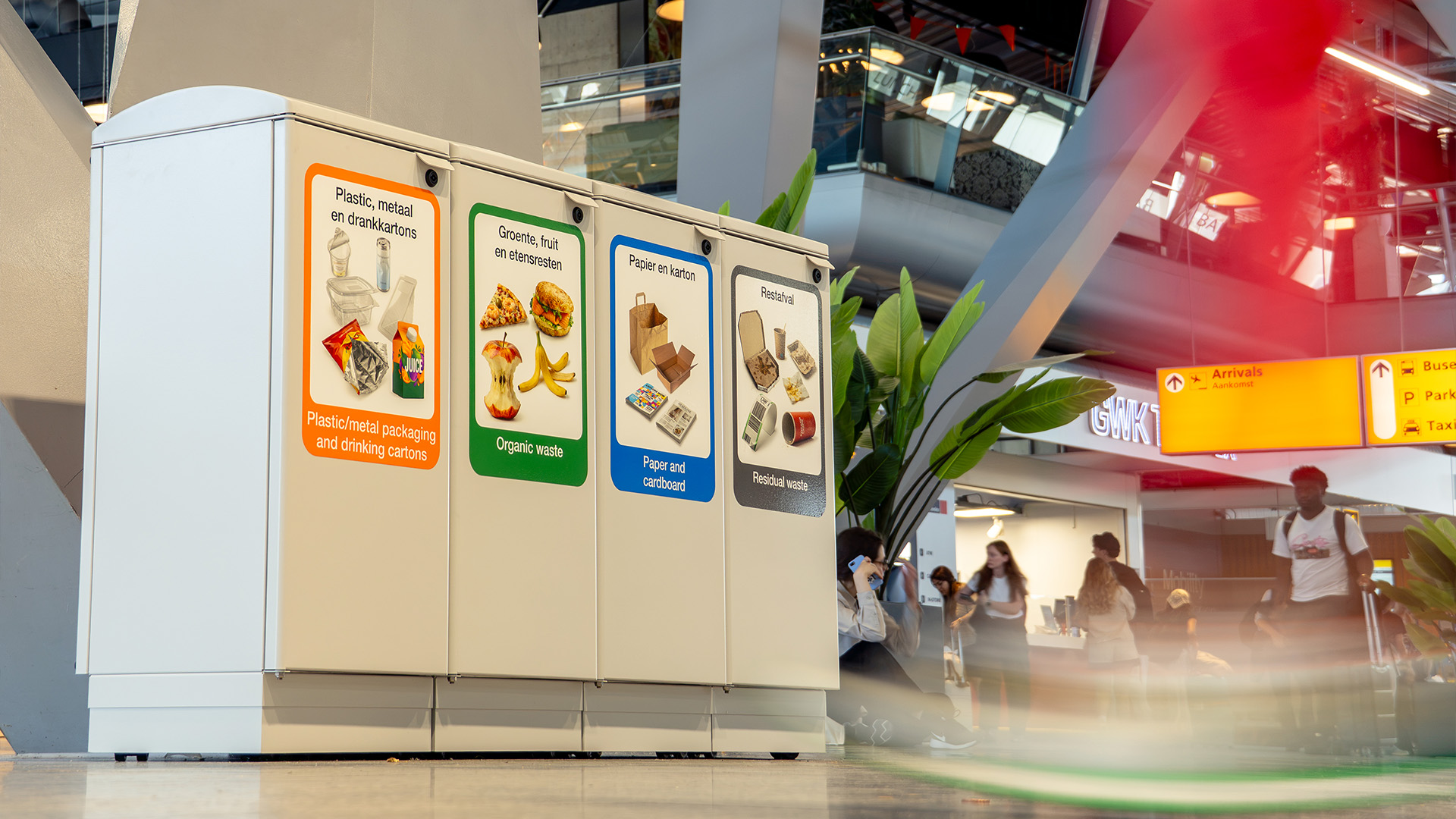
The waste bins at Eindhoven Airport now feature easy-to-understand illustrations to help travellers sort their waste quickly and intuitively
Waste sorting becomes quantifiable
Whether the scheme works should not be left to chance. Further waste scans will show in future how much recyclable material still ends up in residual waste and how cleanly the individual recycling streams are collected. At the same time, the actual quantities will be recorded. This will make it possible to track whether waste is actually being diverted from residual waste into the designated recyclable material streams. Together with the observations made by the waste coach, this will provide a data foundation that Eindhoven Airport and REMONDIS can use to further develop the system in a targeted manner.
“The stations are therefore not an one-off solution, but part of a system that can continuously learn and improve,” says Roger Versluis. “In this way, we are working with Eindhoven Airport to make waste sorting measurable and manageable.”
Next step: the use of AI
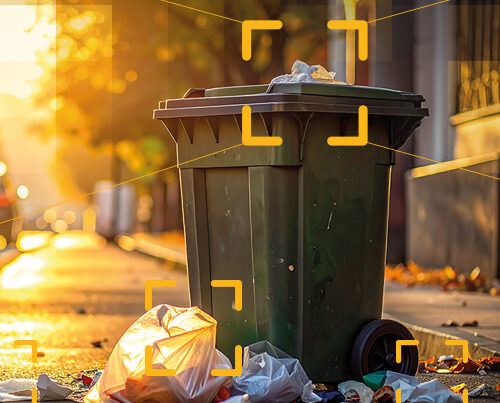
The next stage of development is already planned. Eindhoven Airport and REMONDIS intend to investigate how smart modules can be deployed. With the help of artificial intelligence, these could identify which materials end up in the waste bins. The data collected could reveal at which stations waste is particularly often sorted incorrectly, or what additional guidance might be useful. Rather than having to wait until the next major analysis to respond, this would allow changes to be identified more quickly and adjustments to be made.
The approach taken at Eindhoven Airport demonstrates how the modern circular economy is constantly evolving: success does not depend solely on the right technical infrastructure. It is equally important to understand consumer behaviour, make it measurable, and use this insight to develop the system in a targeted manner.
Image credits: © REMONDIS