
Unit built in just twelve months
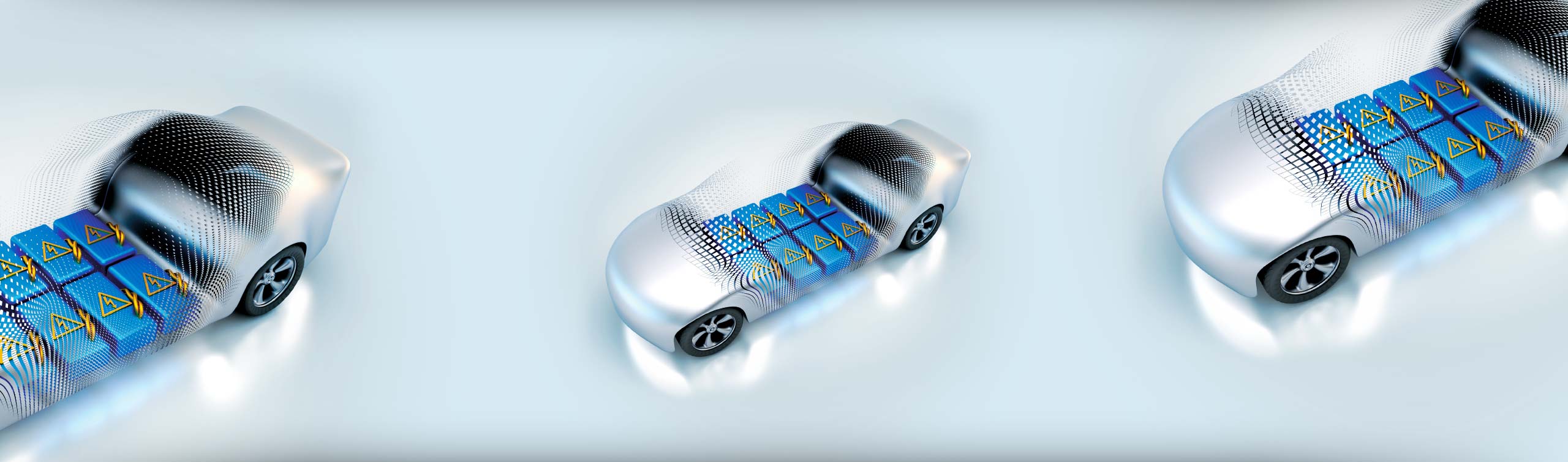
The world’s largest storage unit for car batteries at REMONDIS’ head office in Lünen was officially hooked up to the grid in October. Constructed in less than twelve months, this 13 MWh project has now been completed and the first cords connected to the grid. This project, a joint venture between Daimler AG, The Mobility House AG and GETEC, will now enable a total of 1,000 battery systems from second generation electric drive vehicles to be incorporated into a stationary storage unit.
Helping to drive resource efficiency
The Mobility House is responsible for operating the storage unit in Lünen together with the energy service provider GETEC – and for selling the electricity to the energy markets. The storage unit will be running at full capacity by the end of the year. High performance battery storage units will be an essential part of the energy market, if Germany’s goal of switching from fossil fuels to renewable energy is to be a success. They will be key to stabilising the grid as more and more electricity is provided by fluctuating renewable energy sources as they can level out the dips in energy supply with virtually no loss. At the same time, the project is helping to improve resource efficiency levels: whilst the batteries may no longer be suitable for electric cars, they can still be used in stationary units for at least another ten years. The commercial service life of the batteries from electric cars is effectively doubled when they are integrated into such battery storage units.
Coming full circle
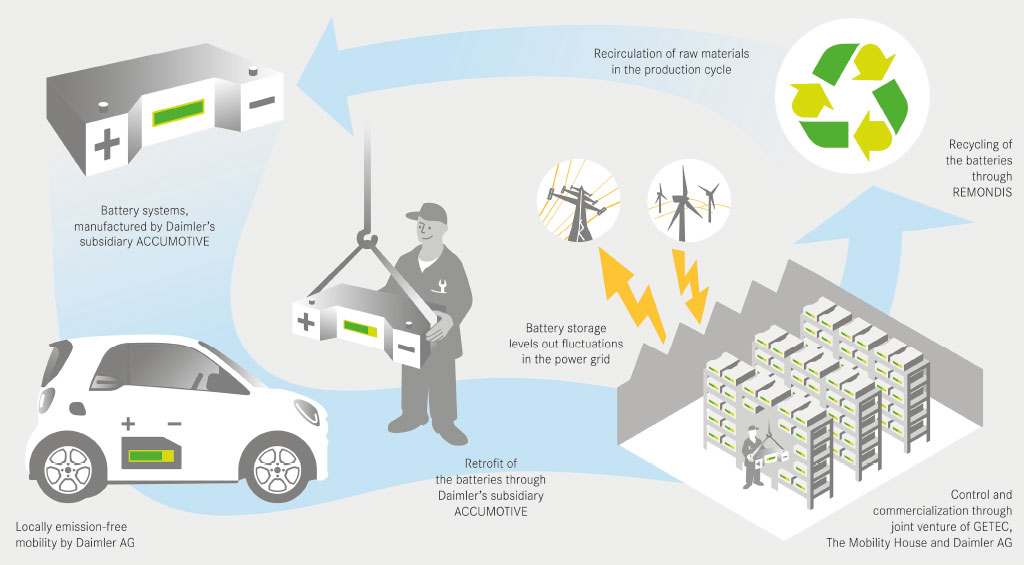
This scheme, therefore, will help improve the environmental performance of electric vehicles and make them more economical. By collaborating with Daimler’s subsidiary, ACCUmotive, and REMONDIS, this project run by The Mobility House and Getec at the Lippe Plant covers the whole life cycle of a battery: the battery systems are produced and processed by ACCUmotive and Daimler sells the range of electric and plug-in hybrid vehicles to its customers. The batteries are then installed in the stationary battery storage unit and the electricity sold on to the energy markets by The Mobility House and GETEC. When the batteries finally reach the end of their useful life, it will then be REMONDIS that will be responsible for recovering the valuable raw materials so that they can be returned to production cycles.
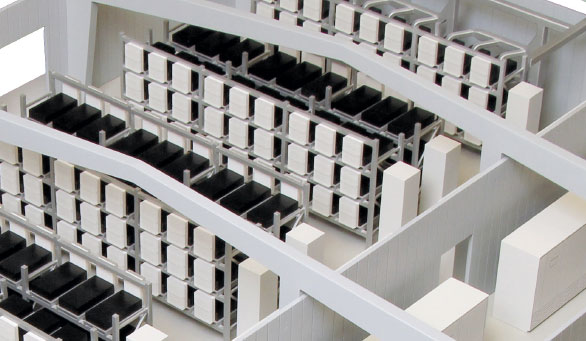
A total of 1,000 battery systems
will be connected to the grid when the unit is running at full capacity
Together, the four companies cover the whole life cycle of a battery


Image credits: Picture 1: Fotolia, 124671181, Author: Patrick P. Palej