

Denmark can be found among the world’s leading countries in a whole range of different areas – from per capita economic output all the way through to quality of life. And this is also true for its environmental, energy and climate policies. Just one example: the country was top of the World Economic Forum’s Environmental Performance Index some years ago and was still in 10th place in 2024. It is also ahead of all the others when it comes to green energy production, which lay at over 80% in 2024. And the same might be thought of its recycling rates with Danish households collecting ten different types of materials in up to five separate bins. This is, however, not the case.
Compared to the rest of Europe, the country’s recycling rates for many of the materials it collects are pretty much in the middle at the moment. Its municipal waste recycling rates lie at around 55% – the EU’s target – and there is still room for improvement as far as its packaging and, in particular, its organic waste are concerned. The quality levels of some collections, such as batteries, have even declined recently. And its volumes of residual waste remain unchanged. Having said this, Danish inhabitants now have access to separate waste collections, many of which have been introduced only just recently, and these reflect the country’s great ambition: namely, to lead the way and set the standards in the circular economy as well. Private sector companies, like REMONDIS Danmark, will be playing a key role in this endeavour.

There is one specific challenge that Denmark must master as it looks to grow its recycling rates – a challenge caused by an undisputed success story: waste incineration. Denmark is one of the pioneers when it comes to using this technology.
A pioneer in waste incineration
There is one specific challenge that Denmark must master as it looks to grow its recycling rates – a challenge caused by an undisputed success story: waste incineration. Denmark is one of the pioneers when it comes to using this technology. It built its first waste incineration plant in Copenhagen all the way back in 1903. This was one of the very first waste-to-energy (WtE) plants in Europe and was used to treat household waste, generate energy and generally reduce volumes of waste. And the country has stuck to this method ever since, investing money over the years to increase the number of its plants and modernise the technology used. For the most part, this concept has enabled the country to avoid landfills and the environmental problems they cause. It currently has a network of 21 WtE plants, with all of them owned by municipal associations, i.e. by regional authorities. In addition, a large cement factory uses the RDF – refuse-derived fuel – produced by these plants.
WtE plants also supply volumes of district heat that cannot be easily replaced. And while the production of electricity is of less significance considering the trend towards renewable energy, it does make sense for these plants to generate power from a business point of view. Despite this, the Danish parliament made the decision in 2020 to reduce the country’s incineration capacities by 30% by 2030. And it liberalised the market at the same time: local authorities may no longer simply incinerate their household waste in their own plants but must put these volumes out to tender. During the first round of tenders, most of this waste went to their ‘own’ incineration plants. It is questionable, however, whether the same will happen during future tenders if competition in the waste management sector continues to grow.

Denmark built its first waste incineration plant in Copenhagen back in 1903. This was one of the first waste-to-energy plants in Europe and was used to treat household waste, generate energy and generally reduce volumes of waste.
The WtE plant operators have two main worries: firstly, that their plants will no longer be profitable and secondly that politicians are pushing for the plants to be closed down even though the investments have not yet been paid off. As a result, the plant operators are now looking to secure their feedstock from abroad, leading to the country becoming a major importer of high-calorific, combustible residual material. It is certainly true that waste tourism helps a plant to make the most of its capacity levels and potentially reduces the amount of waste taken to landfill in other EU countries. It is, however, not only counterproductive looking at the Danish government’s climate strategy and climate targets, it is also pushing up the Danish plants’ carbon emissions.
The main problem here is that while Danish politicians have made the decision to reduce their country’s incineration capacity, they have left it up to the market to decide which plants must close. The theory here should be that the WtE plants in the weakest business position would shut down. With imports of waste continuing to rise, this has not been the case – just two small plants have actually turned off their furnaces. And so, with things moving in an unexpected direction, people have begun talking about Denmark’s ‘waste dilemma’.
REMONDIS Danmark
REMONDIS A/S is one of the leading companies in Denmark’s recycling industry. With around 250 employees, nine locations and an annual turnover of approx. DKK 350 million, it is among the top 10 players in the country’s recycling sector. It operates across the country and is one of the three key recycling businesses in the greater Copenhagen area. Acting as a partner to local authorities, REMONDIS provides household collection services for more than 500,000 Danes. It is also steadily increasing the amount of commercial waste it collects, which presently lies at around 50,000 tonnes of recyclables every year. Since taking over its predecessor company in 2018, REMONDIS has focused, in particular, on expanding its commercial and recycling activities.
The role of private sector recycling firms
The various tasks in Denmark’s circular economy have been clearly divided up and it is the responsibility of the local authorities to collect their waste materials. They may, however, contract this work out via tenders if they wish – something that they often do. Private sector service providers are being awarded fewer contracts than was the case a decade ago. At present, they are responsible for around 75% of the volumes collected. Looking at the uncertain future of the WtE plants and at the impact this may have on the companies and jobs involved, Danish local authorities are now more interested in carrying out the collections themselves. This would enable them to secure more feedstock for their WtE plants and compensate for the recycling activities that they had lost, as these are now being carried out exclusively by private sector recycling firms.
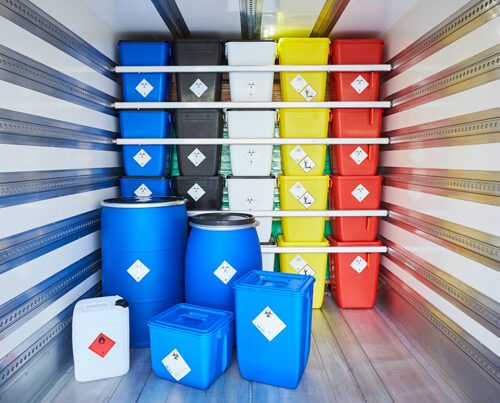
Kerbside collections are used to pick up household waste. Most households have two to three bins for separating their waste (into residual waste, food waste, paper, cardboard, metals, glass and mixed plastics) as well as two additional bins for garden waste and hazardous waste. Old textiles are placed in plastic bags for roadside collections. Local authorities also operate household waste recycling centres where their local residents can hand over their e-waste, building waste and hazardous waste.
The collections are financed through fees. Extended producer responsibility (EPR) schemes make it obligatory for the companies placing the products onto the market to pay for their material streams. Denmark introduced an EPR scheme for packaging on 01 October 2025. Packaging companies must now reimburse households and other companies for collecting and recycling their packaging. Local authorities handle the reimbursement on behalf of households. Private sector recycling firms, such as REMONDIS, carry out the work on behalf of the companies placing the products on the market. Some of the country’s segregated collection schemes are still very new (such as those for tobacco products with filters and fishing gear) and there is still quite a bit of uncertainty as to how much these schemes will actually cost – both regarding the financial contribution that these systems must make towards collecting the materials and the revenue they can generate from recycling their materials.
The private sector waste management industry is responsible for actually recycling the materials and it handles the materials from both the municipal collections and the separate EPR collections. There are a number of hurdles that must be overcome here though. Firstly, it is not always clear when collections end and recycling begins. This can be clearly seen with packaging that has been compacted into bales.
Reducing the volume of the packaging makes it easier to collect and transport the material as it means fewer trips and lower truck tolls – something that is good for the collection firms. Compacting the material to such an extent, however, makes it almost impossible for the recycling companies to sort and process it. Secondly, accurate records must be drawn up to document the complexity of the material streams – on the one hand, to make it clear where the different materials end up and, on the other, to be able to accurately ascribe both the costs and materials.
Denmark’s path towards creating a circular economy and achieving greater sustainability is a prime example of how past successes can initially hinder progress. Key decisions have now been made and only time will tell whether these will deliver the desired results. While change can certainly be implemented more quickly in a small country, any new approaches must first prove their worth before the necessary adjustments can be made. Being patient is a must here. No one doubts, though, that Denmark will reach its goal of being one of the world’s leading countries in the areas of waste management and recycling as well.
The private sector waste management industry is responsible for actually recycling the materials and it handles the materials from both the municipal collections and the separate EPR collections.
Four questions for Søren Eriksen,
Managing Director of REMONDIS A/S
Is it really necessary for ten different categories of waste to be collected separately from households?
As far as recycling is concerned, this meticulous sorting of materials in households is of a limited benefit to us. It’s become overly complicated and has led to more materials being put in the wrong bins. We have to re-sort the materials anyway. This system is due to be reviewed in 2027 and the people doing this should take another look at this pre-sorting scheme in order to reduce the collection costs and grow consumer acceptance. I’m guessing that we will end up with fewer categories of waste being collected from households.
What do you think about the current split between collection and recycling?
Well, there is still a grey area here – when exactly does a collection stop and recycling start? This also concerns the separation between the public and private sectors. Optimising the way materials are transported, such as baling, is an example of this. Some local authorities do this as do some private contractors. I think it’s best to let the private sector contractors do this as we know best how the materials can most effectively be recycled.
What do you think about the recent moves taken to drive forward the circular economy?
Denmark is a small country, so – on paper – many things would appear to be simpler and faster to implement than elsewhere. We are very dependent on the prices and capacities in other countries, though, when it comes to recycling because our home market is so small. We certainly have a competitive edge being part of the REMONDIS Group as we have access to our sister companies.
What are you planning to do next?
One of the things we are focusing on is electrifying our fleet. This will also give us a competitive edge as local authorities are increasingly making this a requirement in their tenders and large cities are limiting the areas that can be accessed by vehicles run on conventional fuels. The advances made in battery technology will also make it possible for electric trucks to be used over longer distances as well and not just locally.
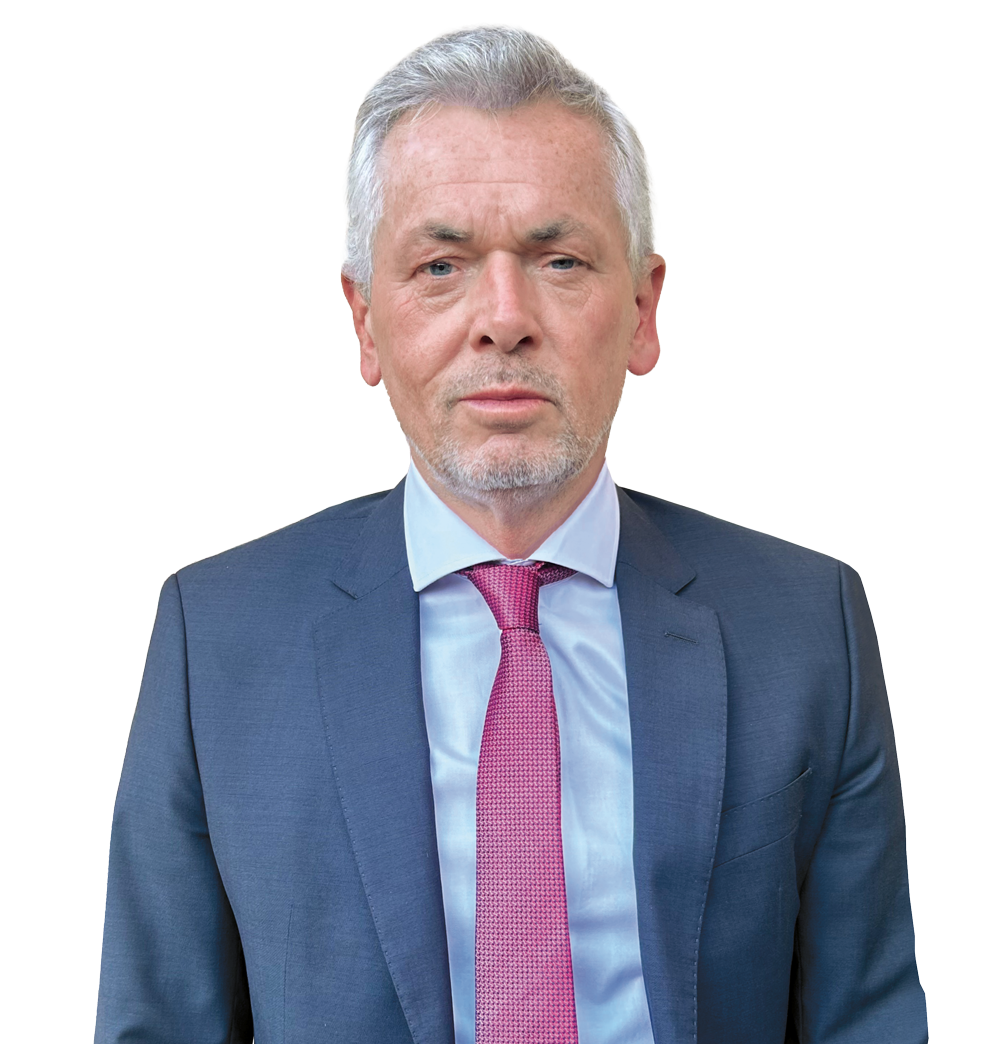
Søren Eriksen
Søren Eriksen (60) has been managing REMONDIS A/S since 2019. He has many years’ experience of working in Denmark’s recycling sector and held managerial positions in other recycling companies before joining REMONDIS.
Image credits: image 1: Adobe Stock: Apichaya; image 2, 3: Shutterstock: Shutterstock AI; image 4: © REMONDIS