
How can a holistic circular economy be achieved in the commercial vehicle sector? TSR Group demonstrates this together with the Daimler Truck division Mercedes-Benz Trucks, the waste collection vehicle specialist FAUN Umwelttechnik and 30 additional partners with the concept vehicle “reECONIC”
Circular thinking
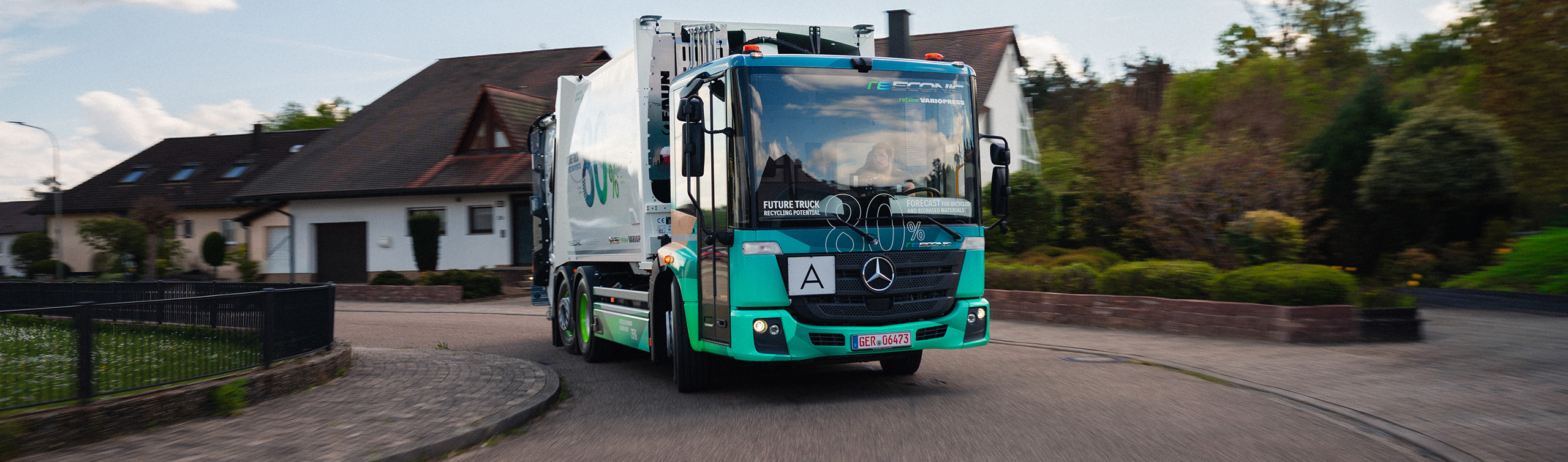
The partners have manufactured the battery electric collection vehicle, based on the Mercedes-Benz eEconic, in a particularly resource efficient manner. The concept vehicle is equipped with the new FAUN reNew VARIOPRESS body, which is also partially made from recycled materials. The vehicle will celebrate its world premiere on May 4 at IFAT, the world’s leading trade fair for environmental technologies, in Munich. The reECONIC is scheduled to undergo extensive real world testing at REMONDIS in the second half of 2026, meaning it will then transition into practical use. The experience gained from this testing is expected to provide further insights for the continued development of circular vehicle concepts.
As a collection vehicle, the reECONIC with FAUN reNew VARIOPRESS particularly underscores the value of circular production, as the vehicle itself contributes to resource reuse not only in its design but also in its operational function. It collects materials that are sent for recycling and is itself partly made of recycled materials, for which consistent resource reuse is a necessary prerequisite. TSR Group was the source of the idea and a key partner throughout the entire project period.
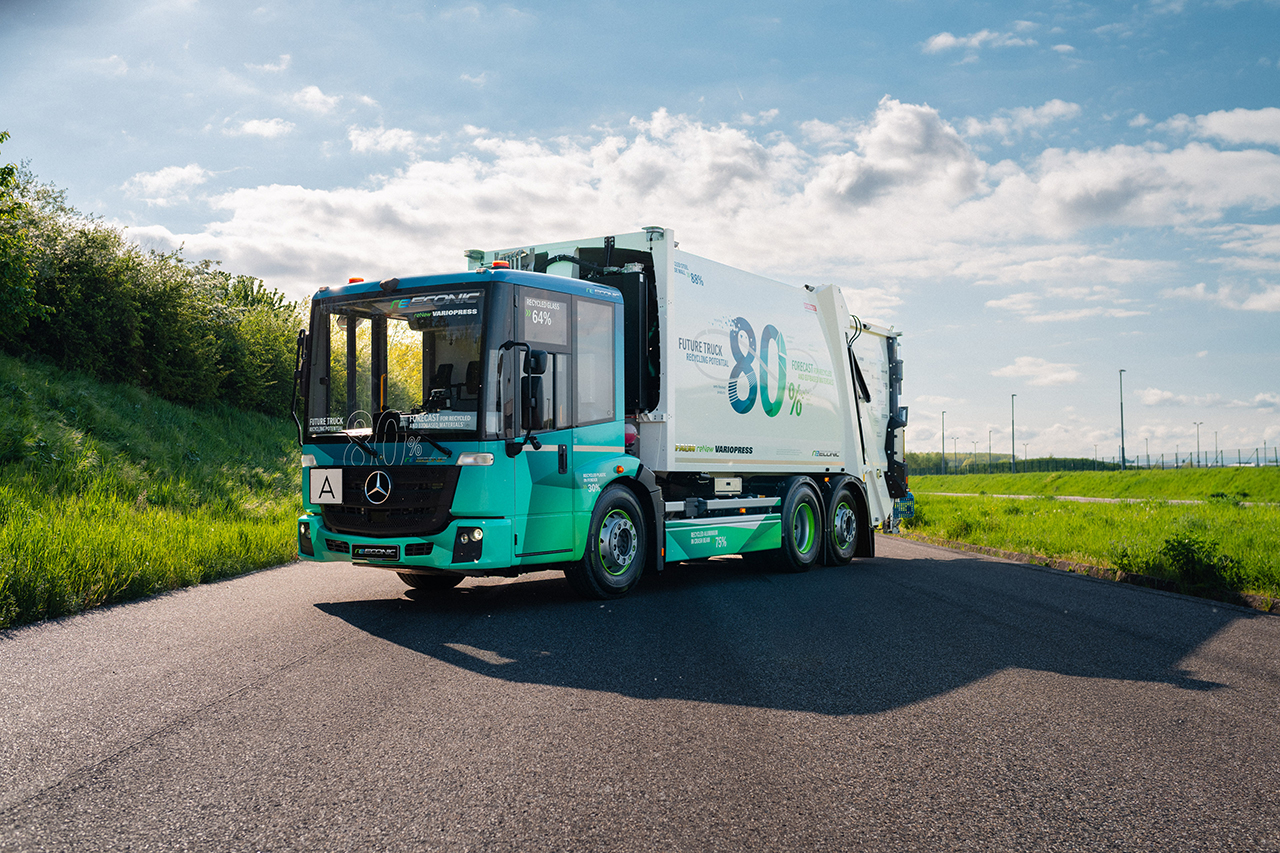
With the reECONIC concept vehicle, the partners are demonstrating the feasibility of a battery-electric waste collection vehicle produced in part from recycled materials
Examples of components made from circular economy materials
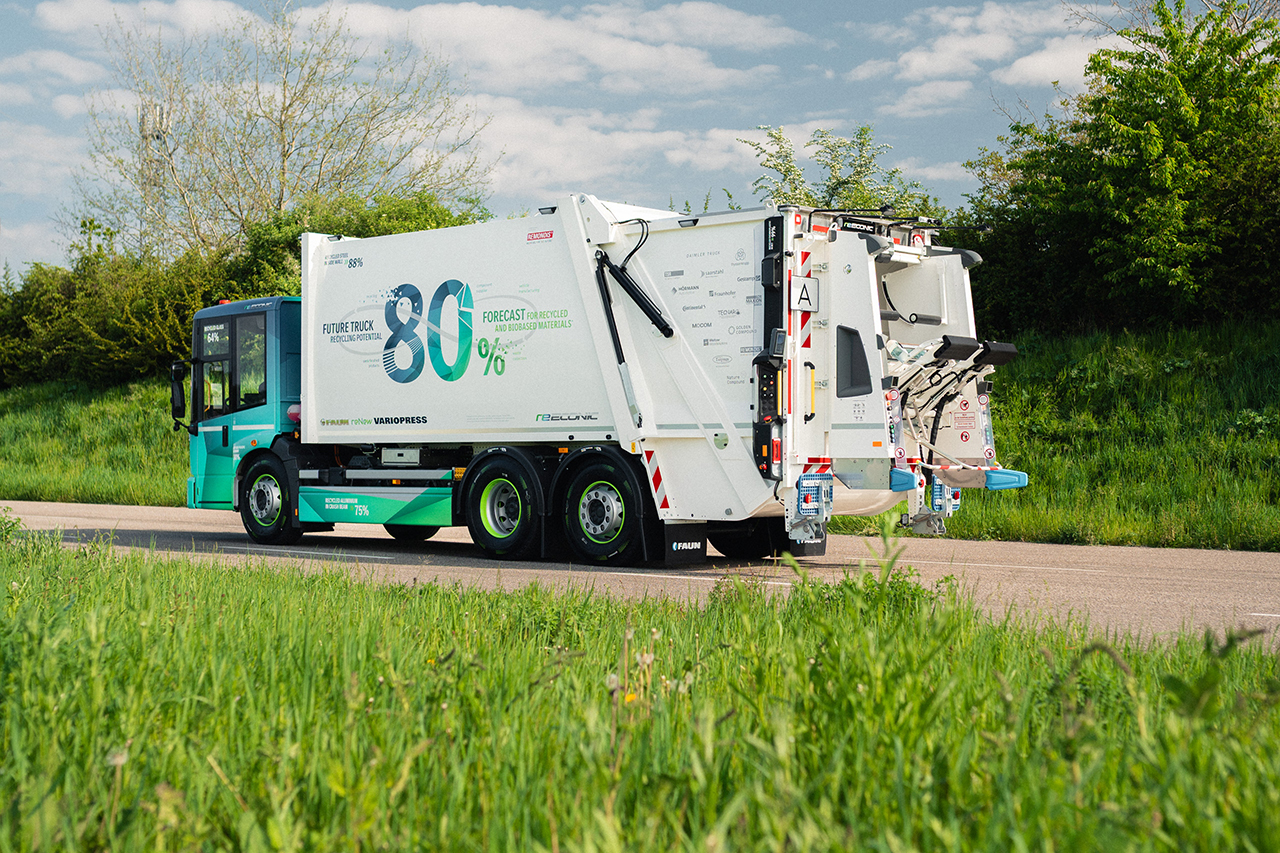
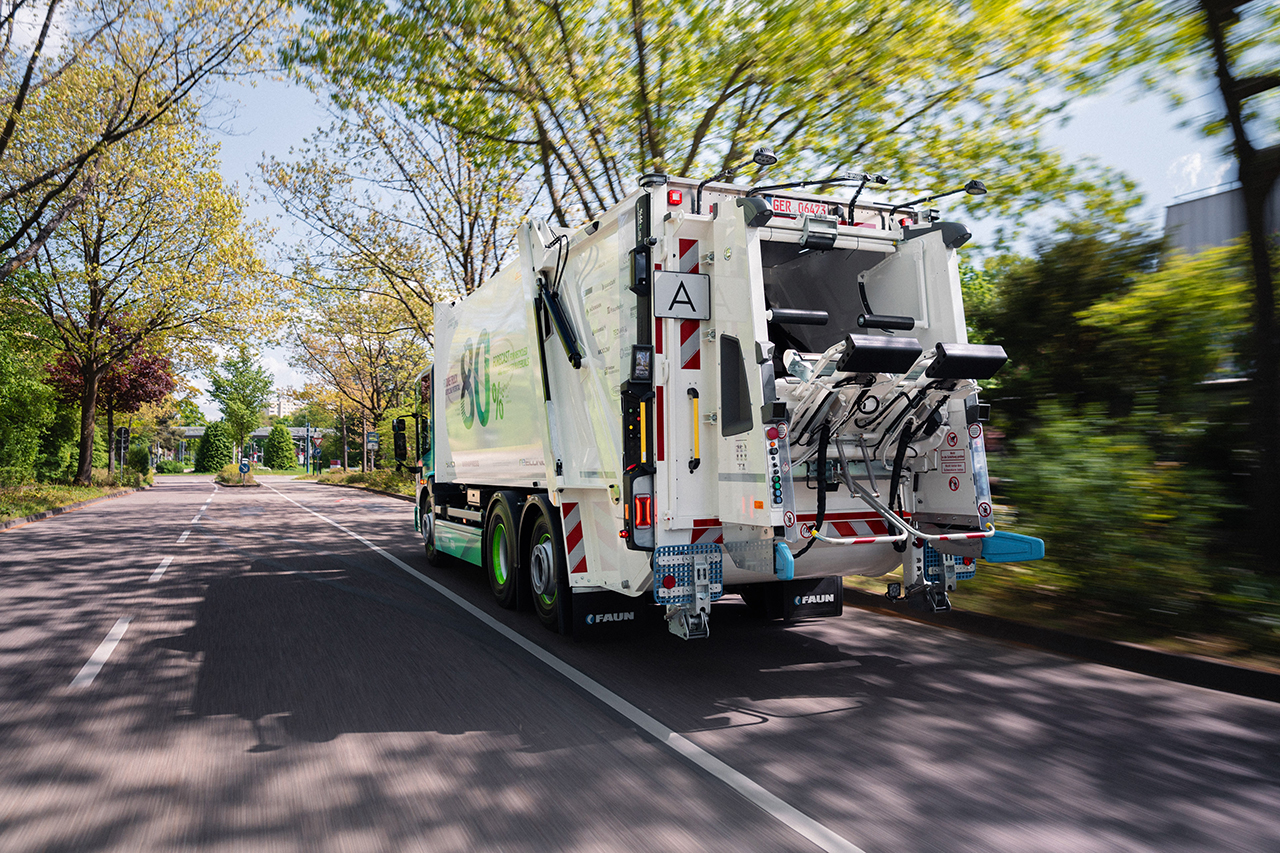
In the reECONIC, selected components were replaced with recycled materials as well as natural and bio based materials. The partners supplemented the physically implemented components installed in the vehicle with projections and forecasts to determine how the share of recycled materials could theoretically be further increased. Overall, the combination of installed components and the study results shows that, theoretically, around 80 percent of the main material groups steel, aluminum, glass, and plastic, which would otherwise be produced conventionally in the series version, could be replaced with recycled materials as well as natural and bio based materials. These main material groups account for a total of 6.5 tons of the overall weight of the standard series eEconic. In perspective, this means that, using the available production processes and materials, up to 5.2 tons could theoretically be substituted. TÜV SÜD has certified the values and methodology in this regard.
Achim Puchert, CEO of Mercedes-Benz Trucks: “Sustainability is an integral part of our strategy, which we are implementing in this project alongside strong partners. We are pursuing the clear goal of decarbonizing our products. In addition to battery electric and hydrogen based drive solutions, climate friendly and resource efficient production and supply processes also make a significant contribution. With the reECONIC, we are demonstrating a concrete path toward a more sustainable value chain in vehicle production.”
Malte Sonnenburg, CEO FAUN Group: “Sustainability is not a trend, but a mindset. With the FAUN reNew VARIOPRESS, we are proving that responsibility and economic efficiency go hand in hand and that the circular economy can become a reality in vehicle manufacturing.”
Bernd Fleschenberg, COO of TSR Group: “Through the reECONIC joint project, we are working with Daimler Truck, FAUN, and 30 partners to impressively demonstrate the strategic importance of the circular economy for the industry’s raw material supply. We initiated this project because closed loop systems can only be created if they are conceived and implemented collaboratively across the entire value chain. This conserves resources, significantly reduces energy consumption, and lowers CO₂ emissions. At the same time, it strengthens the resilience of industrial supply chains and reduces dependence on global raw material markets. reECONIC thus serves as a model for an industrial circular economy that combines raw material security with sustainability.”
A strong partner network
In addition to TSR Group, Daimler Truck, and FAUN, the other project partners include companies active in the fields of recycling raw material recovery, semi finished product manufacturing, and component production, as well as in the metal, plastics, glass, and wood processing industries.
What unites these partners is that they have initiated significant changes in relevant production steps to make their processes more CO₂ efficient.
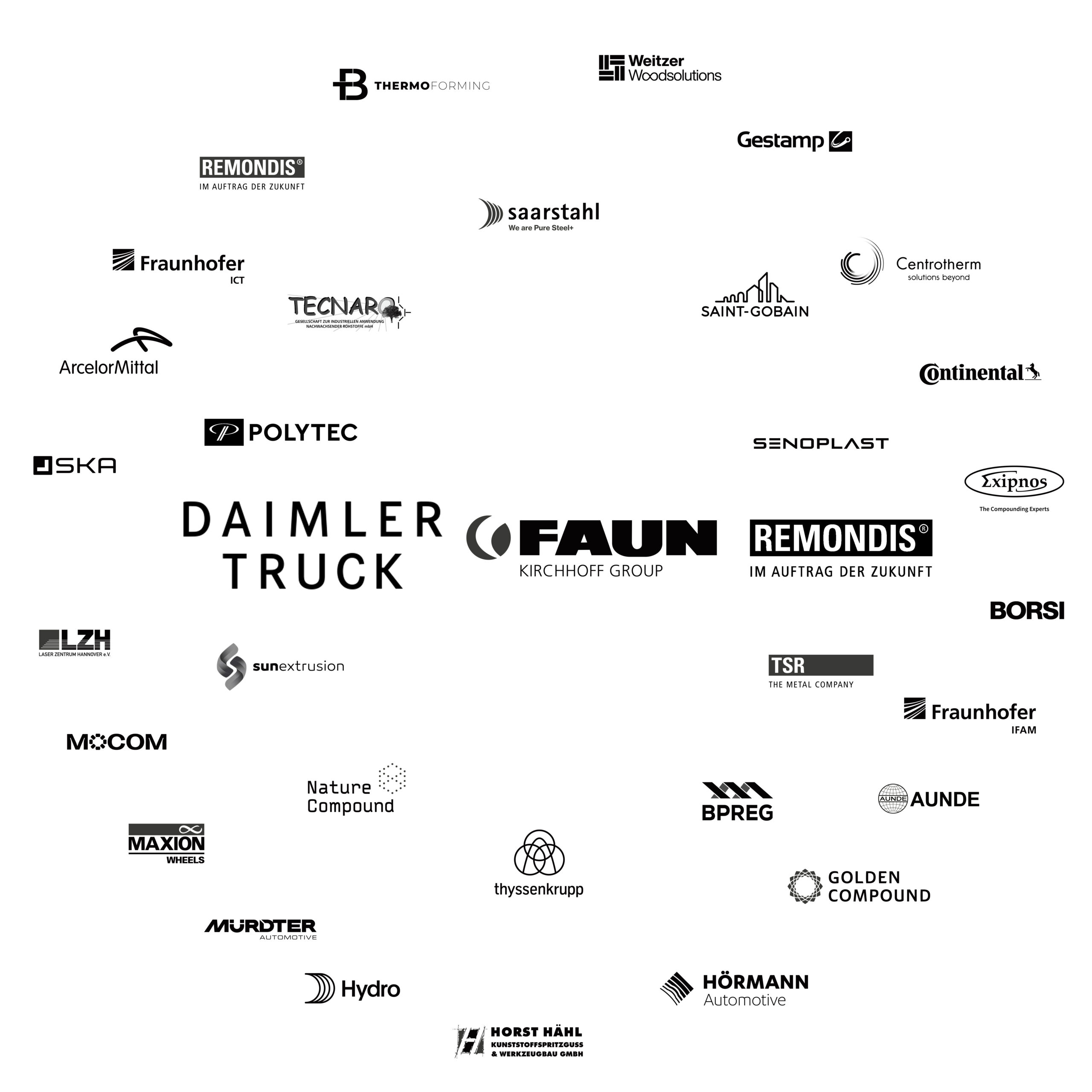
Image credits: © Daimler Truck