

Hospitals and other medical institutes have particularly high demands when it comes to managing their waste. Service providers must not only take safety and statutory requirements into consideration and deliver smooth processes. They must also meet their clients’ growing expectations regarding sustainability and resource conservation. This is precisely where REMED – Chiresa AG’s healthcare specialists – comes into play. Acting as a long-standing partner to medical institutions, the company develops holistic material flow management solutions across the whole of Switzerland.
“Our waste management services must be reliable and safe and be delivered smoothly without them impacting on a hospital’s day-to-day operations and without the patients and medical staff being bothered with the subject of waste,” explained Kristin Doppelreiter, who has been managing the REMED division since the beginning of 2025. In addition, two further key demands must also be met: firstly, that all hazardous medical waste is handled safely and, secondly, that the customers’ wish for circular, sustainable solutions is satisfied. “This particular combination means that we have to carry out a very wide range of tasks and work very closely with many different partners.”
“Our waste management services must be reliable and safe and be delivered smoothly without them impacting on a hospital’s day-to-day operations and without the patients and medical staff being bothered with the subject of waste.”
Kristin Doppelreiter, manager of the REMED division
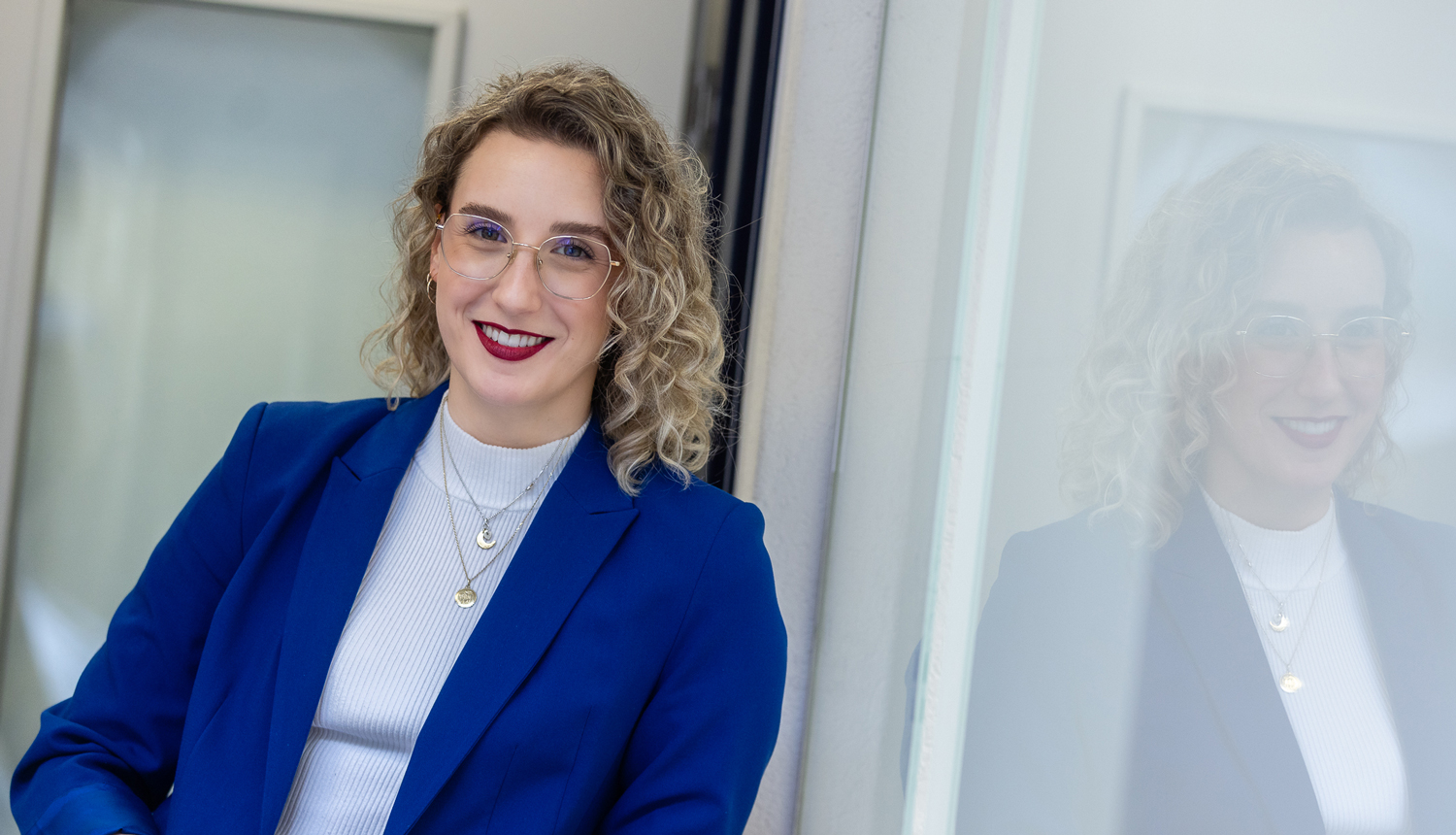
About Kristin Doppelreiter
Kristin Doppelreiter studied economics and environmental sciences in Austria and began working in the waste management industry more by chance than design. While studying at university, she took on a position at a plastics sorting facility in Graz that saw her holding tours for a variety of stakeholder groups.
After completing her Master’s dissertation in France – which examined the interaction between the waste management sector and tourism – she then moved to Switzerland. She has been working at REMONDIS Schweiz for almost five years now, where her work has primarily focused on the challenges and opportunities of a future-proof circular economy. At the beginning of 2025, Kristin Doppelreiter was put in charge of the REMED division, which she herself had played a key role in setting up and shaping – from determining its strategic approach to recruiting the team.
A partner for all types of waste
While many waste management models tend to focus on individual types of waste, REMED follows a holistic approach: hospitals and medical institutes have one dedicated contact person who can deliver all the services needed, no matter whether they involve chemical, pathological, paper or plastic waste.
REMED coordinates the handling of these different kinds of waste in the background by working with REMONDIS Group companies and regional partners across the whole of Switzerland. A system that creates lean processes and clear responsibilities for its customers.
What’s more, this division also cooperates closely with REMONDIS Medison in Germany. The regular discussions held between the two businesses help to open up new opportunities, for example to find innovative ways to treat single-use medical materials or to develop new services. “The goal here is, over the long term, to work together to further develop solutions and create new services for the Swiss market as well,” Kristin Doppelreiter continued.
Advice rather than just waste management
As far as REMED is concerned, their work does not stop once they have picked up the waste from their customers. On the contrary, they see themselves as being a partner, helping their customers to further develop their processes and make them more sustainable. Part of their work is, therefore, to make on-site visits to carefully analyse their clients’ operations and see whether the various processes can be simplified or made more efficient. The goal here is to ensure safety requirements,
cost-effectiveness and environmental factors are all given equal weight. In many cases, for example, the systems used to separate the different types of waste can be simplified or the in-house transport routes made more efficient without having to compromise on quality or safety.
Thanks to its close collaboration work with other REMONDIS companies, the business is also able to draw up holistic concepts by bringing in know-how from a variety of different specialist areas. The result is a comprehensive range of services that goes far beyond conventional waste management. “You can’t just meet the minimum requirements, especially in the healthcare sector,” Kristin Doppelreiter pointed out. “What is key here is delivering reliable processes, high quality standards and solutions that reflect the everyday operations of the various institutions.”
Expansion of the network & international projects
When the independent REMED division was set up in 2022, priority was initially put on cementing existing customer relationships and establishing a stable foundation so that the business could be further developed. At the same time, this new structure created an opportunity to review and revise processes as well as to systematically advance customer collaboration work.
A further key milestone achieved during this time was the expansion of its network of partners in Switzerland. By working with regional partner companies, it was able to set up a network covering the whole of the country so that it now has short transport routes and is able to provide on-site support. And it continues to expand its network – only just recently, for example, it began offering its services in Ticino.
International collaborations and projects have also been growing in importance alongside these developments. REMED has been working with international pharma firms to develop concepts that enable valuable raw materials to be recovered from medical products so that they can be returned to market for reuse. One recent example: a Europe-wide return scheme for injection pens. These aids, which are typically made using various types of plastic, metal and syringes, are collected in a number of European countries and then sent to Switzerland to be recycled. This enables all of the valuable materials to be recovered and returned to market as recycled raw materials rather than them being incinerating at a WtE plant.
About REMED
REMED offers a full range of services to the healthcare sector in Switzerland. It specialises in handling all types of medical waste – no matter whether it involves hazardous or non-hazardous materials. Its portfolio ranges from delivering classic waste collection and waste management services and providing advice, to drawing up waste management concepts and carrying out hazmat officer tasks, through to offering a wide selection of products for safely storing and transporting hazardous medical waste and recyclable materials. REMED is a business in Switzerland affiliated with Chiresa AG making it part of REMONDIS Schweiz AG, a company with 400 employees across the whole of Switzerland that handles around 300,000 tonnes of waste every year.
To find out more, go to: www.remondis-remed.ch
The circular economy needs uniform standards
Looking ahead, Kristin Doppelreiter believes there is further potential for developments within the sector. One important subject, she says, is setting up a nationwide plastics collection scheme in Switzerland. “Looking at the situation in other countries, it always surprises me that many regions in Switzerland still do not have a separate collection scheme for plastics.” It is, however, positive to see that progress has been made in this area in Switzerland over the last few years. As natural resources continue to become scarcer, it will automatically become more important to recover materials for reuse.
This brand story takes a look at the circular economy in Switzerland today, the way the Swiss collect their waste materials and the prospects for the future.
Greater levels of standardisation within the healthcare industry could also help make the sector more effective. “Practically every institution uses its own colour system nowadays to label its hazardous medical waste bins. Uniform colour labelling schemes would make the work much simpler – both when it comes to storing the materials and in a hospital’s everyday operations.” And, Doppelreiter added, having uniform colour labels would make it much easier to switch over to grey, resource-friendly, single-use medical bins made from recycled plastic.
One thing is clear as far as REMED is concerned: the demands on waste management service providers operating in the healthcare sector will continue to grow. Which is why it is all the more important to offer integrated solutions that give equal weight to safety, efficiency and resource conservation. At the end of the day, the circular economy does not begin at the end of a process but requires a holistic approach that starts at the very beginning.
Image credits: image 1: © REMONDIS; image 2: © REMED; image 3: iStock: NicoElNino