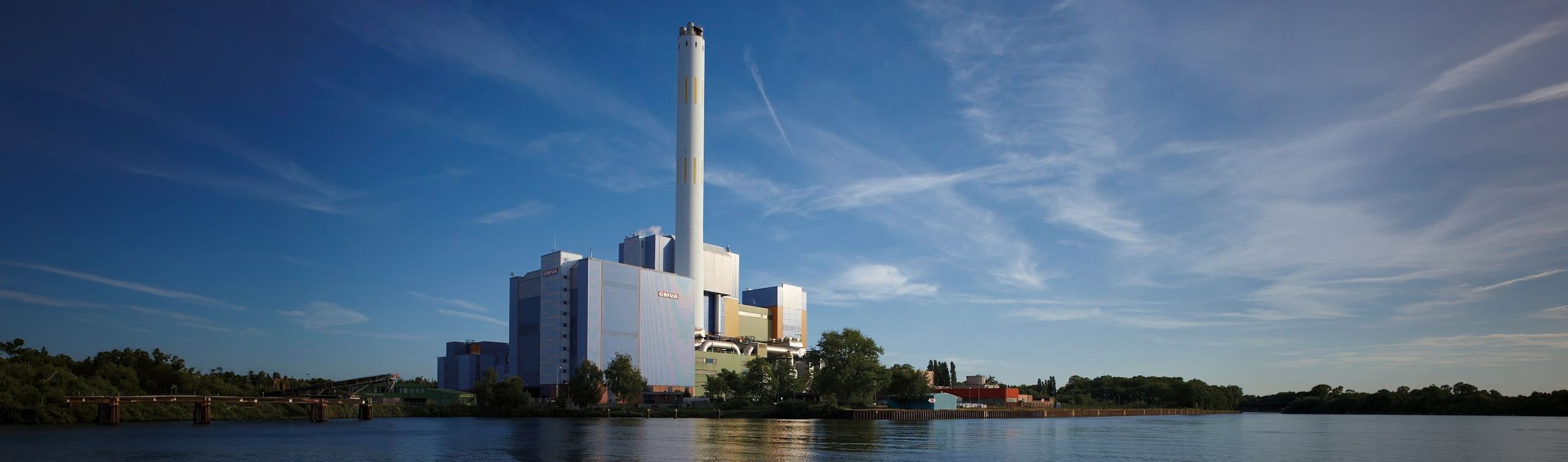

Promoting a unifying leadership culture: Michaela Schröder, the managing director of GMVA Niederrhein (a waste-to-energy plant), has led her team confidently and pragmatically over the last decade. She always approaches her staff openly, with respect and on an equal footing, motivating them to play an active role in the company and encouraging them to drive the business forward. And this has had an impact: many employees have remained loyal to the company for decades. We asked Michaela Schröder a number of questions as we put together this piece: How did she come to join GMVA? What have the Netherlands got to do with her CV? How important is it to her to promote young talent? And what interests does she have outside her work?
Michaela Schröder is a pragmatist with a penchant for numbers, structures and processes. An internship at the waste management firm Trienekens in Viersen during her time at university played a big role in deciding her future career. It did not take long back then for her to realise just how important the recycling sector was. When she returned to the region to take up her position as managing director of the largest waste-to-energy (WtE) plant, she had already gathered many years of international managerial experience alongside her degree in economics.
Today, GMVA in Oberhausen is one of the most important producers of electricity and district heat. Created in 1972 following the conversion of Concordia Bergbau’s colliery power plant, GMVA really is a business steeped in tradition.
“Which explains why we have such close ties to the region and the people living here,” commented Michaela Schröder. Nowadays, GMVA is a public private partnership (PPP) between the City of Oberhausen, the City of Duisburg and REMONDIS.
“Our company employs 200 people, many of whom have highly specialised qualifications. They are all committed to ensuring that the business runs smoothly and sustainably. Up to 700,000 tonnes of waste are thermally treated here every year. State-of-the-art flue gas cleaning systems ensure that the chimney primarily releases steam into the atmosphere. “And our emissions here are well below the statutory ceiling values,” Michaela Schröder was pleased to report.

“We are responsible for the environment, the people in our company and the people in our neighbourhood.”
Mission statement of the corporate cultural development project at GMVA
For ten years now, she has been in charge of the plant’s power supply and waste management operations as well as the strategic further development of the company in her role as managing director. It is a well-known fact that such work is not a walk in the park. “The sector is about to undergo some major changes. The development of our business is being shaped by issues such as carbon capture, emissions trading, optimising energy production, local authorities’ district heat plans, digitisation and automation as well as the use of artificial intelligence. All these different areas require both large investments and ongoing further training courses for our staff.”
Michaela Schröder is tackling these changes with confidence. She is well-known for being fearless and pragmatic. Her strength lies in her ability to plan ahead with foresight.
Just one example: a large number of long-standing employees – the so-called baby boomers – will be reaching retirement age over the next few years and leaving the company. The business is ready for these changes. Four years ago, Michaela Schröder set the course for this generational change by introducing a cultural change process across the company. The mission statement of this corporate cultural development project pronounces: “We are responsible for the environment, the people in our company and the people in our neighbourhood. Which is why we are never satisfied with the status quo but are always looking to advance the business. Our leadership style and our technology are always state-of-the-art. And we wish to be both the motor and the driving force when it comes to protecting the environment.”
The managers involved have played an active role in these changes. The business does not, however, have a top-down philosophy. “People are truly motivated when everyone is included in the decision-making processes and in implementing the changes,” Michaela Schröder explained. Getting rid of hierarchies has even led to the managers setting stricter standards for their own areas of responsibility without them being pressurised to do so. Michaela Schröder is satisfied: “We are heading down the right path.”
Everyone working on an equal footing – this is what defines Michaela Schröder’s leadership style and is something she truly believes in. She spent many years in the Netherlands and this time had a big impact on her. She studied economics there and held managerial positions at a variety of companies, first in the Netherlands and later in Belgium. Indeed, Michaela Schröder could really be called half Dutch – both because she speaks the language fluently and because she still remains in close contact with her business acquaintances and friends living there. And she has adopted many Dutch practices into her work as managing director of GMVA.
“No one holds back with their opinion in the Netherlands. The people there are confident, sit around the table as equal partners, put forward their ideas and openly speak about what is important to them. I think that’s a good thing,” she remarked. She appreciates a leadership culture that values its staff and encourages them to become actively involved in the business. This is definitely one of the reasons why the working environment is so good at the company: a large number of the employees has remained loyal to the company for decades and many of their children now work at GMVA.
Talking about employee satisfaction: GMVA introduced a future leadership programme two years ago under the direction of Michaela Schröder. The idea here is to offer employees the opportunity to gain further qualifications within the company, i.e. the chance to move up the career ladder at GMVA. This programme has not only been warmly welcomed by those taking part. Managers have also presented this future leadership programme – the only one of its kind in its sector – at a trade fair in Berlin and various articles have been published about it in the media.
Three shareholders delivering safe & efficient operations
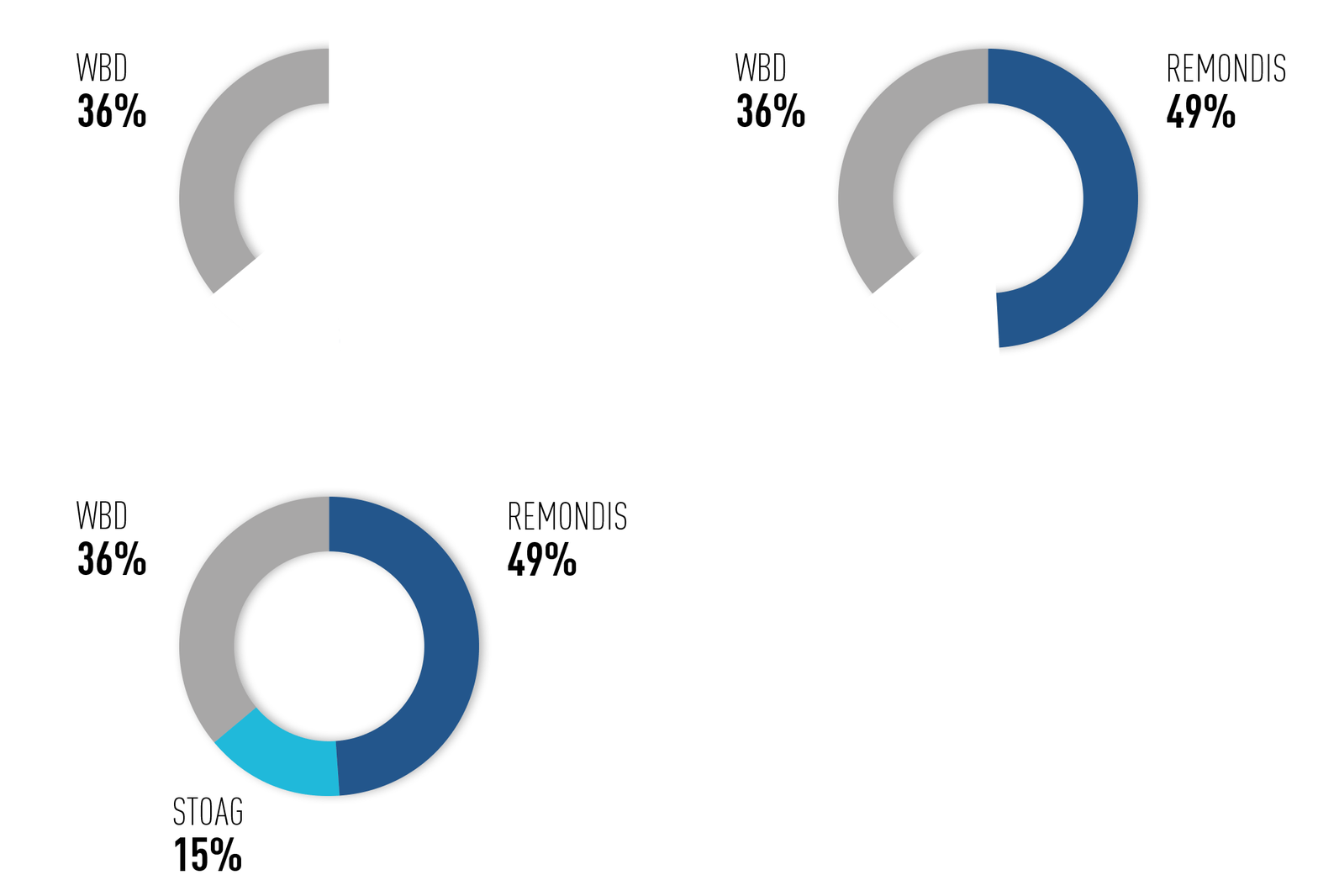
Originally a fully publicly owned company, GMVA has been operated as a public private partnership since 2001. It is owned by the City of Oberhausen, via the shareholder STOAG Stadtwerke Oberhausen GmbH, and the City of Duisburg, via the shareholder Wirtschaftsbetriebe Duisburg – AöR (WBD). REMONDIS, a private sector circular economy company, is the third partner in this collaboration – contributing towards the business’s success with its waste management expertise.
Sailing & classic car trips
So what does Michaela Schröder like doing in her free time? She does not hesitate when asked about her hobbies. She loves sailing on the Ijsselmeer. Preferably with her husband and her friends. Michaela Schröder was encouraged to go sailing for the first time by colleagues soon after she joined GMVA. They asked her if she would like to go sailing with them. Right from the very first trip out in the boat, she knew that this was the right sport for her. “Water is my element,” she said. Besides sailing, Michaela Schröder also loves classic cars.
She and her husband are proud owners of a 60-year-old Mercedes W 110, a car known for its tail fins. Unlike her ambitions at GMVA, where she believes it is key to have cutting-edge technology, she loves the car’s “old, tried and tested technology”. She leaves any repair work to her husband. What she loves to do is to take part in classic car road trips in the summer, travelling through the countryside with her husband at her side. “That is simply great – and perfect for clearing my head,” Michaela Schröder said.

Just hot air? Not at all! Clean energy, too
Besides generating electricity, GMVA also produces district heat. This is fed into the local network and supplied to a large number of businesses and private households – reducing the demand for heating oil by between 15 and 25 million litres a year (depending on the heating requirements).
An interview with Michaela Schröder, managing director of GMVA Niederrhein
“Innovation is important but not at any price.”
What strategy are you pursuing to ensure GMVA enjoys long-term success?
Michaela Schröder: For me, a good strategy means showing the direction of travel well in advance and preparing robust, workable decisions. Such a strategy unites technical feasibility, prudent business choices, and all regulatory requirements – and it must stand up to the demands of our everyday operations.
A strategy can only be effective if all of our employees and decision-making committees are fully behind it and prepared to help further develop it. Showing appreciation, getting managers and specialists involved and having transparent decision-making processes are all integral parts of our corporate culture.
Against the current backdrop of volatile markets, growing uncertainties and major changes facing the business – and I don’t just mean the regulatory changes here – it is important to have a forward-looking strategy and a well-structured organisation. This includes having experienced and well-trained staff as well as the necessary flexibility to be able to adapt to changing framework conditions.
What do you believe an outstanding WtE plant needs to have?
Michaela Schröder: An outstanding WtE plant does not just have spectacular technology. It also has stable processes, high levels of plant availability, safe operations and permanently low emissions. What is key here is that the technology works reliably and is soundly operated each and every day. What’s more, a modern, reference WtE plant has a future-proof set-up across all areas of its business – personnel, technology, organisation, culture and economic sustainability. In other words, it runs a business that is efficient, resilient and attractive to its employees, shareholders, the region and local authorities and not just now but long into the future as well.
What role does innovation play in your strategy?
Michaela Schröder: Innovation is important but not at any price. We deliberately deploy sound technical solutions that have proven their worth. For us, further development means, above all, continuously optimising our systems, making the most of our operational experience and making targeted investments to create clear benefits in the areas of safety, the environment and economic efficiency.
At the same time, it is important to us that all of our departments remain up to date with the latest developments in their field. We always keep a close eye on any promising technological and organisational advances that are being made. And we regularly meet our partners as well as trade associations and specialist groups and have a good network. This ensures that we can spot and evaluate relevant developments at an early stage.
Furthermore, we carry out systematic checks on our work processes to see where automation and digitisation could potentially grow efficiency levels as well as to examine where artificial intelligence can be used sensibly and responsibly.
How do you handle new technological developments?
Michaela Schröder: We systematically evaluate all the different aspects of new technologies – from their technology readiness, operational safety and economic efficiency to whether they reflect regulatory standards. They can’t be implemented in our business until all these criteria have been met. This approach creates reliability and reduces risks.
What are the challenges currently facing the industry?
Michaela Schröder: It is the task of our industry to run future-proof operations as well as to systematically further develop them within the tricky environment of increasing regulatory requirements, volatile markets and growing societal expectations. At the same time, we need to make sure that we reconcile cost efficiency, a strong environmental performance and supply security. Alongside this, the costs involved to meet regulatory requirements are growing all the time. This means that we must guarantee stability and reliability on the one hand and sensibly prioritise different aspects of our business and carefully target the use of our resources on the other.
On top of this is the challenge to set up the business so it is fit for the future – be it personnel, technology, organisation, culture or economic sustainability – so that it remains resilient and delivers a strong performance long into the future and meets the expectations of the shareholders, local authorities and the general public.
How important are the workforce for a WtE plant’s success?
Michaela Schröder: It’s not possible to run a safe and efficient WtE plant without highly qualified and experienced employees. Operational experience, a strong sense of responsibility and a clear leadership are all key factors behind a WtE plant’s success. The staff cannot be replaced with technology. What’s more, employees play a decisive role in further developing the organisation of a WtE plant as well as in driving forward its innovative strength, corporate culture and sustainability. We began early on to steer our corporate culture in this direction and to ensure our managers were and are trained accordingly – this is an ongoing process that must be continuously carried forward.
What things do you personally feel are important in your leadership role?
Michaela Schröder: It is important to me that things are made clear, that everyone understands the decisions that are made and that responsibilities are handed to those with the right levels of expertise. For me, good leadership means creating a framework that enables the work to be carried out professionally. What’s more, I believe it is important to further develop the employees’ skills, to encourage them to see the big picture and to promote an open culture, one that is based on trust.
Networking within the organisation, a good collegial atmosphere, professional input from outside the business and the opportunity to put forward ideas to further improve operations are all just as important to me as continuously advancing the organisation. As far as I am concerned, leadership is a sustainable process that offers a sense of direction and simultaneously provides the space for employees to work independently.
“It is the task of our industry to run future-proof operations as well as to systematically further develop them within the tricky environment of increasing regulatory requirements, volatile markets and growing societal expectations.”
Michaela Schröder, Managing Director of GMVA Niederrhein
How do you see the company developing over the long term?
Michaela Schröder: Our focus is on ensuring the company has the right set-up for it to operate safely, efficiently and cost-effectively long into the future. This includes having a robust technological base, clear strategic priorities and an organisation that can handle changes in an objective and structured manner.
I also feel that it is important to further strengthen the company’s roots in the region and to make the most of our infrastructure, operational features and areas of expertise to develop new areas of business so that our set-up is even more future-oriented and innovative.
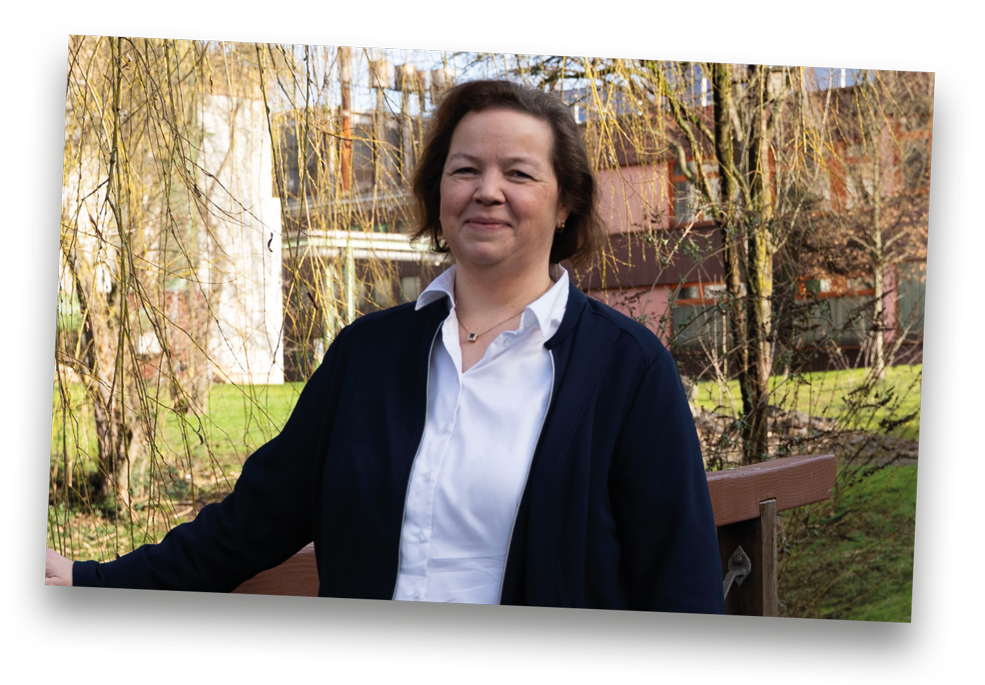
Image credits: © GMVA