
An interview with Prof. Rieckmann from Cologne University
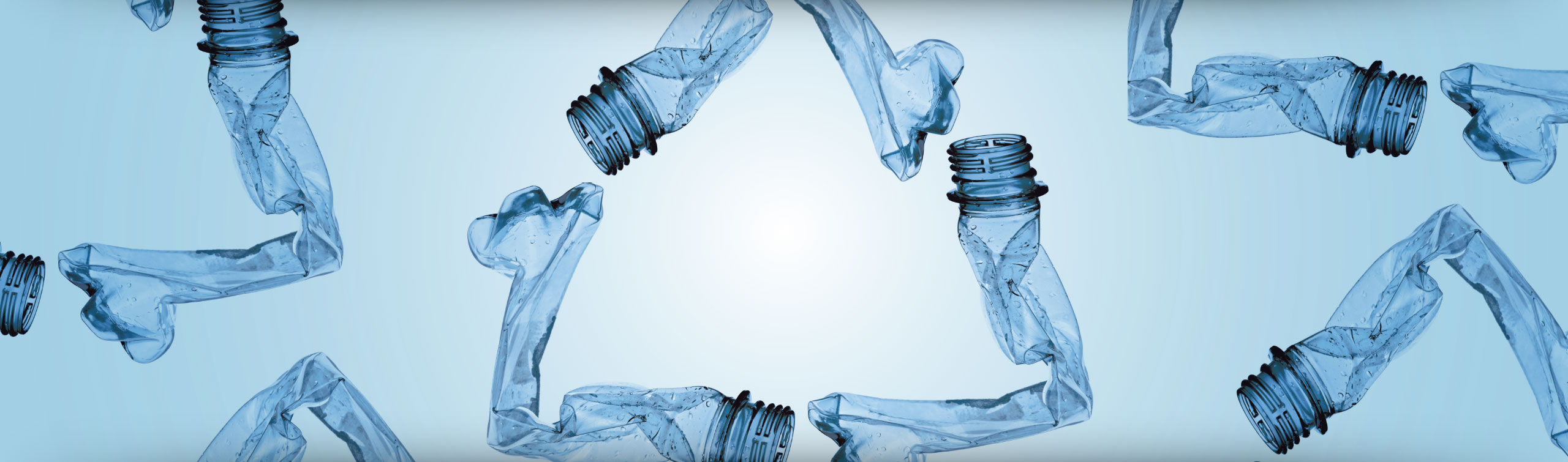
Recycling bottles made of polyethylene terephthalate (PET) not only helps conserve our planet’s natural resources, it is also an effective way of curbing global warming. REMONDIS aktuell spoke to Prof. Thomas Rieckmann from the TH Köln (Cologne University of Applied Sciences) about the latest developments in this field. He is considered to be one of the pioneers of PET recycling having focused on this subject for over two decades, during which he has held a number of positions including that of R&D manager in the plastics industry.

Interview
Professor Rieckmann, PET recycling is believed to be a great way of promoting sustainability. What are the main advantages for the environment?
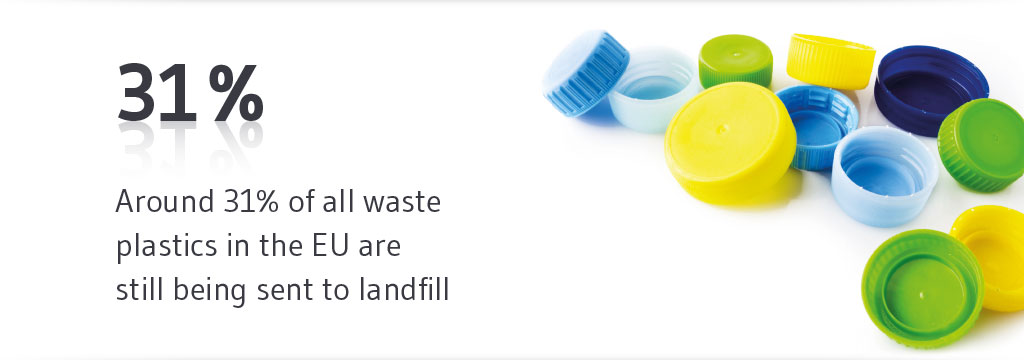
Thomas Rieckmann: One of the biggest plus points is the low amount of energy needed to recycle the material – giving it a considerably better carbon footprint. Moreover, recycling means less plastic ends up in landfills. Around 31% of all waste plastics in the EU are still being sent to landfill. Very few EU member states have banned this practice.
Is PET more difficult to recycle than other types of plastic?
Thomas Rieckmann: Compared to polyolefin plastics, such as PP, PET is a very complex material to process. Thanks to its properties, however, it is possible to recycle it and restore its original performance characteristics. This is not possible with polyolefin plastics, such as PVC, PE and PP, as they have undergone chemical reactions that are irreversible. The performance characteristics of products made from these recycled plastics are generally not as good as those made from virgin material.
For the most part, the PET bottles – which have been returned to shops – are already relatively well sorted. Is it possible to recycle used PET bottles from commingled collections, for example bottles from the recycling bags or recycling bins?
Thomas Rieckmann: Yes, this is possible – from a technological point of view. At the TH Köln, for example, we’re currently in the process of developing a system to produce the PET molecule elements, DMT and ethylene glycol, from mixed coloured PET bottles. It’s possible to use every colour here as a raw material including opaque bottles and brown multi-layer bottles.
Whether it is economically viable to separate and remove the PET from the other materials in the recycling bags and bins depends on what percentage it makes up of the overall contents. It also very much depends on the price of crude oil.
Cutting-edge technology is needed for bottle-to-bottle recycling.
What are the PET flakes produced by mechanical recycling systems actually used for?
Thomas Rieckmann: Recycled PET flakes are primarily used to make drinks bottles, plastic film, plastic filament, staple fibres and plastic strapping.
Over 66 billion PET bottles were recycled in Europe in 2014. Does this mean that the end of the road has already been reached in Europe?
Thomas Rieckmann: That depends on the prices of the PET monomers, i.e. the basic chemical components of this plastic, as well as on energy costs. For years now, PET has – more often than not – been the packaging material of choice for food and drinks such as water, soft drinks, beer, milk and wine. The amount of PET needing to be recycled is, therefore, likely to continue to increase.
Can PET be endlessly recycled?
Thomas Rieckmann: No, endless recycling is not possible simply because of its physical and chemical properties. PET chemistry can be described as a network of eleven chemical reactions. A number of these reactions result in thermal degradation and discolouring, both of which are unfortunately irreversible and so can’t be undone. The only properties that can be completely restored are the main reactions of the PET synthesis. All this means that fully closed material and recycling cycles are simply not possible. Looking at the technology available on the market today, approx. 40% to 50% of the material needed for bottle-to-bottle recycling must be virgin PET.
How do you personally see the PET recycling sector developing?
Thomas Rieckmann: Well, looking in my crystal ball, I can see more recycled PET being used for drinks packaging and other types of food packaging over the medium term. If future developments make it possible for terephthalic acid (TPA) to be replaced with a monomer from renewable raw materials, then this should also increase the volume of food packaging made of polyesters.
“One of the biggest plus points is the low amount of energy needed to recycle the material – giving it a considerably better carbon footprint.”
A specialist for PET recycling: Prof. Thomas Rieckmann, Faculty of Mechanical Engineering and Plant Technology at the University of Applied Sciences in Cologne
Image credits:
Picture 1: Bigstock, Photographer: PicsFive
Picture 3: Fotolia, Photographer: Sylwia Brataniec