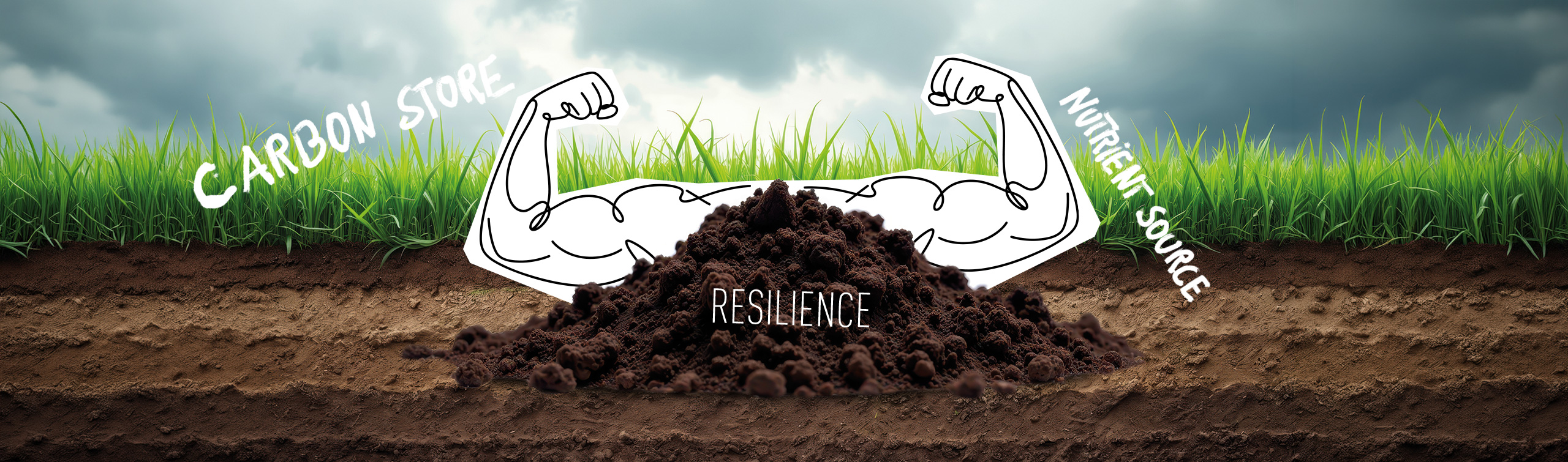

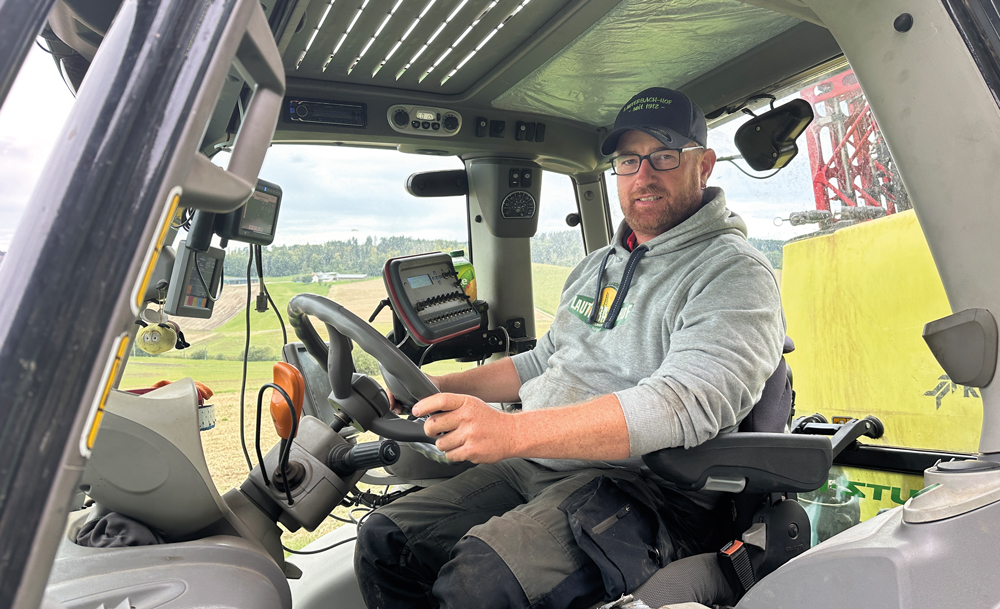
Stefan Leichenauer drives his spreader up and down one of the crop fields on his farm row by row. His 90 hectares of cultivated land are fertilised with compost. His Lauterbach-Hof farm is situated in Tengen in the German state of Baden-Württemberg and he has been using RETERRA’s organic compost for 16 years now. He is, therefore, one of the farmers in Germany that has opted to use RAL quality-assured compost on his farm. This humus-rich compost is a sustainable source of nutrients and improves soil health in a variety of ways. All in all, compost both ensures that humus remains in the soil and increases the soil’s organic matter content. This makes the soil more resilient and more able to cope with weather events, such as heavy rainfall, heat and drought – weather phenomena that are becoming more severe and more unpredictable as climate change kicks in.
Healthy soil is the cornerstone of our food supply, an important carbon store and is able to retain water. Humus plays a key role here.
Soil protection is climate action
The latest research findings show that woods, meadows and pastures in Europe currently act as carbon sinks, while cultivated fields are weak sources of carbon. It is essential to prevent soils from releasing their carbon to mitigate climate change. Healthy soil is the cornerstone of our food supply, an important carbon store and is able to retain water. Humus plays a key role here. And yet humus is being steadily depleted as a result of farming when the organic matter is removed as crops and grass. The valuable top layer of soil can be carried away by wind erosion, soil compaction and heavy rain. Around 100 years are needed to create a one-centimetre layer of humus in a temperate climate such as here in Europe.
Soils are disappearing
More fertile soils are being lost around the world than are being created. Indeed, soil has become one of the Earth’s ecosystems that is most at risk. Erosion, compaction, salinisation, pollution and the loss of humus have pushed many soils to their limits. Nutrient cycles are grinding to a halt, soil life is being lost and yields are falling. Soils are losing their ability to retain water and store carbon – something that is having a direct impact on climate resilience. Deserts are created if such soil degradation processes worsen. And it is not just the southern hemisphere that is being affected. More and more areas in Europe are suffering, too. Regions in southern Spain, Italy and Greece are already showing clear signs of desertification and desiccation.
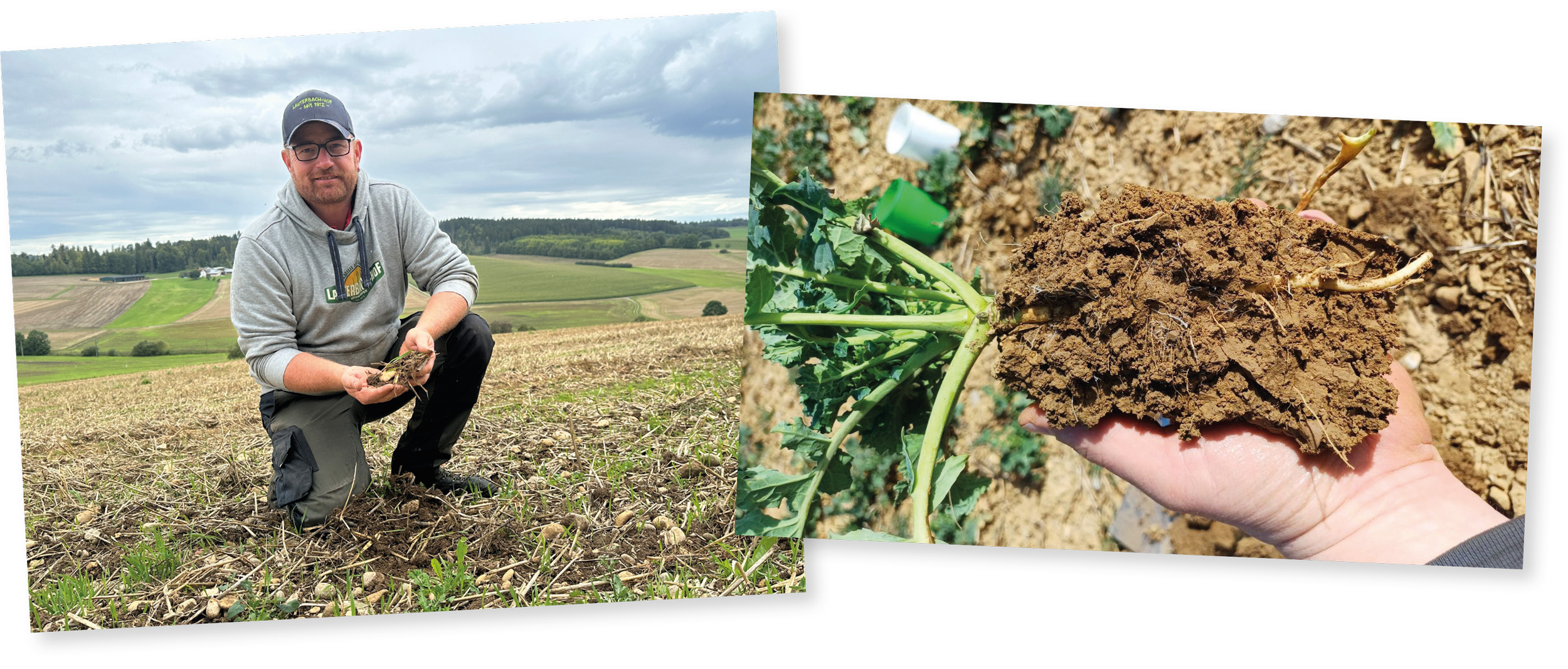
Stefan Leichenauer has been using RETERRA products for 16 years now; the humus-rich compost ensures that the soil is more resilient and more able to cope with weather events
The impact of compost fertiliser: The soil contains more humus and has a looser structure so that the plants can take root more easily, absorb more nutrients and grow better
Healthy soil – a carbon store
Germany is also showing such signs: at least one-fifth of the country’s arable land is considered to be at high risk of erosion. The regions that are particularly susceptible are those where the soil is often exposed or worked intensively, weakening its structure. Intensive farming is seen as being the main driver of soil degradation. Intensive use of fertiliser, chemical pesticides, heavy machinery and monocropping are having a negative impact on both soil structure and soil life. If soils are kept fertile, they can store large volumes of carbon. In contrast, degraded soils emit carbon. And, as these soils are less able to retain water, the number of floods and droughts increase and plants are more susceptible to stress. A farm can sustainably counteract this development by practising circular agriculture. Stopping or reducing the use of pesticides protects soil organisms. Improving soil quality with compost, mulch and a targeted use of fertiliser promotes carbon stores and soil health.
The world of humus
Humus is effectively all of the decomposed organic matter found in soils. It is a complex mixture of plant, animal and microbial organic matter and is permanently being degraded, altered and restructured. Humus comprises around 60% carbon, which the dead plants had removed from the CO2 in the air. Other components include nitrogen, phosphorus and sulphur. A soil’s humus reserves have different levels of stability and lifespans. Arable land contains between 1% and 2% humus, grassland soils approx. 10% and peatland soils between 10% and 20%. Experts differentiate between nutrient humus and permanent humus. Nutrient humus is made up of plant residue and other living creatures that have been crushed. This organic matter is, for the most part, biochemically unstable and easily broken down, resulting in it releasing nutrients and energy. Permanent humus consists of a more stable organic molecular structure with carbon chains that act as nutrient and water stores and as a habitat for a particularly large number of microorganisms.
Humus provides habitat
Humus supports a wide range of the soil’s biological and ecological functions and contributes greatly towards the development of soil structure. Furthermore, humus provides a habitat for soil organisms and plays a key role in the carbon cycle as it stores carbon. Humus acts as a store and buffer for water, nutrients and pollutants and has a major impact on a soil’s capacity to retain nutrients and contaminants. In most cases, there is more humus in topsoil than in subsoil. This means, therefore, that topsoil is particularly sensitive to changes caused by soil use and climate change.
The soil ecosystem: a competent team
Most people know as little about the soil under their feet as they do about distant galaxies. One quadrillion bacteria – a truly competent team – live and work in just one square metre of fertile topsoil. A single leaf is eaten and excreted many times before it is fully transformed into humus. The soil’s inhabitants work side by side here: woodlice, springtails and millipedes take care of the heavy lifting. Then the threadworms and single-celled organisms take over, breaking the material down even further. Bacteria and fungi colonise the material.
Earthworms, mice and moles dig their tunnels, mixing up and aerating the layers of soil. This process, known as humification, produces humus matter and enriches the layers of topsoil. It is this material that gives soil its typical dark colour. The minerals and nutrients that are essential for plant growth are bound to this humus matter. Microorganisms must break these nutrients down into CO2 and H2O so that the plants can absorb them. This mineralisation process effectively releases the nutrients that had originally been in the dead organic matter so that they can be taken up by the roots.
Earthworms, mice and moles dig their tunnels, mixing up and aerating the layers of soil. This process, known as humification, produces humus matter and enriches the layers of topsoil.
Composting at RETERRA
REMONDIS’ subsidiary RETERRA operates over 100 composting plants and anaerobic digesters worldwide to recycle organic waste from household food waste bins as well as plant and tree cuttings. This network of facilities processes more than 2.5 million tonnes of organic residue every year. The material is recycled using a number of certified processes to make quality-assured composts, soils and substrates as well as, in some cases, to produce electricity and heat. Moreover, it also makes mulch products, fall protection for playgrounds, digestate fertiliser, wood-based fuels and technical substrates.
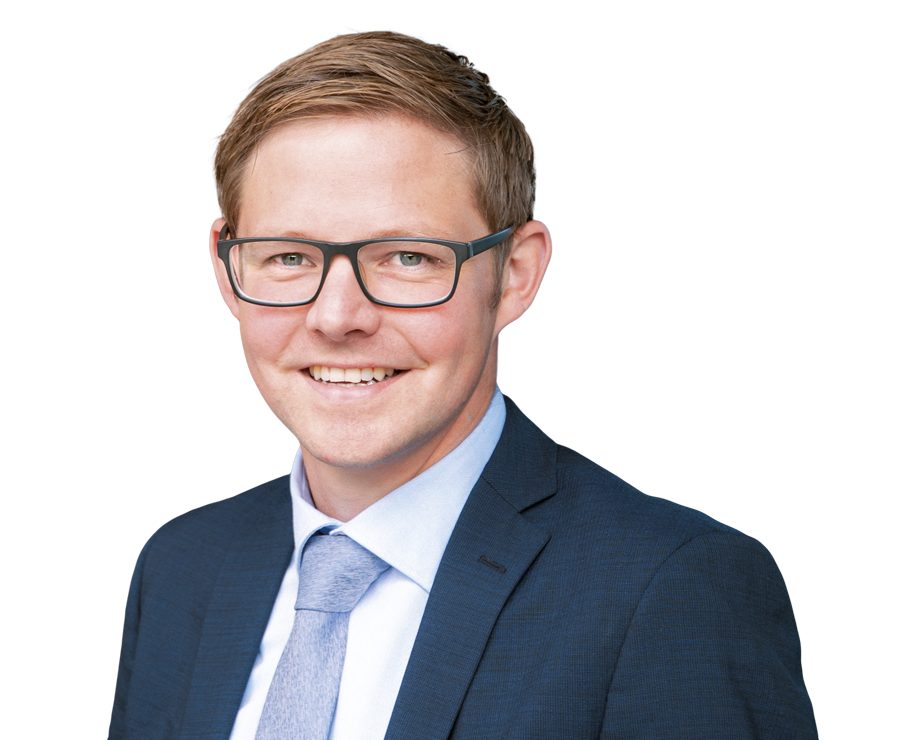
Pirmin Eibofner is a sales manager at RETERRA Hegau-Bodensee. The company supplies the region with compost. Stefan Leichenauer and his Lauterbach-Hof farm are one of the firm’s long-standing customers
From organic residue to compost
Each of RETERRA’s composting plants operates slightly differently. A number of processes are needed to transform organic material into compost – its Ahrensfelde plant, for example, uses the following steps: to begin with the refuse collection vehicles empty their organic material into the plant’s reception area. After the material has been inspected and its quality checked, it is transported via conveyor belts to be homogenised and cut up. Magnets pick up any ferrous metal pieces. A series of screening equipment removes large contaminants, such as plastic and stones. In many of the plants, the final screening process to remove any remaining bigger pieces of outthrow is carried out by hand by the RETERRA employees as they visually check the material. The larger pieces of organic material are placed into the so-called logistics tunnel and the fine materials into the feed bunker. New material is regularly fed into the anaerobic digester – the centrepiece of this plant – via this feed tunnel. By creating the perfect conditions and removing all oxygen (hence the word anaerobic), the billions of microorganisms in the digester transform the organic substances into biogas. The biogas is extracted from the digester.
The viscous digestate is removed using vacuum technology after approx. 20 days and mixed with the larger pieces of organic material in the logistics tunnel. Finally, this material is placed into large concrete garages – the composting tunnels – where it decomposes for around 14 days under perfect temperature and humidity conditions and with strictly controlled ventilation before being further processed.
The compost is then removed before undergoing further intensive processing steps to extract any remaining contaminants. The material is screened into different sized particles. A multi-stage air separator is used at the end of the screening phase to blow out any tiny pieces of plastic.
Further interesting facts about humus can be found at (German only): www.humus.de
The better soil improver
“The compost contains all the nutrients that plants need,” explained Jan Dübbelde, head of REMONDIS’ bioenergy and biomass division. “Thanks to the RETERRA composts, far fewer phosphorus, potassium, calcium and magnesium mineral fertilisers must be used. What’s more, the alkaline components in the compost means, for the most part, that there is no need to lime the soil. And we mustn’t forget the more minor components – i.e. the sulphur and trace elements copper and zinc – which also play an important role.” Composts are, therefore, ideal soil improvers and a wonderful base for plants. “The high proportion of organic material builds up the humus content, helping to improve the structure of the soil, activate soil life and prevent erosion,” Jan Dübbelde continued. “At the same time, our compost is instrumental in regulating water supply and maintaining a stable microclimate.”
Humus on farms
Almost 58% of the composts are used on farms (BGK/Federal Compost Quality Association, 2020). Organic farms, in particular, like to spread humus-rich material on their fields but conventional and hybrid farms are also increasingly using these products. “We are, in fact, always sold out nowadays,” reported Pirmin Eibofner, a sales manager at RETERRA. The company supplies its compost to farms in the region as well as to gardening businesses and hobby gardeners. Stefan Leichenauer also gets his compost for his Lauterbach-Hof farm from here. “Much of our work involves educating and informing people about our products,” Pirmin Eibofner explained.
“Thanks to the RETERRA composts, far fewer phosphorus, potassium, calcium and magnesium mineral fertilisers must be used.”
Jan Dübbelde, Head of REMONDIS’ Bioenergy and Biomass Division
Educating people about compost
RETERRA travels to trade fairs and regional events to inform people about compost. “We primarily present our compost and our liquid digestate and explain how they are used, what their contents are and how they benefit soils,” Pirmin Eibofner said. “We do this to try and counteract the typical prejudices that people have against compost.” These include worries about heavy metal contents and other contaminants as well as potential problems caused by unpleasant odours and dust. “We invite farmers to visit our facility and we work with farming associations and organic associations to clarify how our compost is produced.”
Pirmin Eibofner has noticed a growing interest in soil protection, especially among younger farmers. “It’s all about stopping soil depletion and making soils more resilient for the future.” RETERRA also has its own specific goals: “We want to further grow the quality of our composts,” remarked Pirmin Eibofner. This includes, he said, further reducing the number of contaminants, increasing the degree of composting, fine-tuning the screening processes and continuously improving customer services. “We’re currently in the process of rolling out a software that makes it easier for farmers to plan and implement the spreading of compost on their fields.”
“We invite farmers to visit our facility and we work with farming associations and organic associations to clarify how our compost is produced.”
Pirmin Eibofner
An interview with farmer Stefan Leichenauer
“Earthworms are my best employees”
Stefan Leichenauer, a farmer with a degree in agriculture, is the third generation in his family to run the Lauterbach-Hof farm in Tengen in the German state of Baden-Württemberg. The farm has 140 hectares of land (90 hectares of farmed land, 50 hectares of pastureland) and 50 beef cattle. Stefan Leichenauer took over the farm from his father in 2008. He completely reorganised the way the business was run after suffering a burnout in 2016.
He has been using RETERRA compost on his fields for 16 years now, actively encourages regional marketing efforts, helps other farmers with mental health issues, promotes compost and soil protection and speaks out in the media. RE:VIEWS sat down with Stefan Leichenauer to talk about his experiences with compost – and whether it really makes financial sense to use it.
“Humus is my farm’s capital. The top 17 centimetres of my soil – they are my capital.”
Stefan Leichenauer, famer & agricultural specialist
What role does humus play on your farm?
Stefan Leichenauer: Humus is my farm’s capital. The top 17 centimetres of my soil – they are my capital.
What do you do to keep the humus in your soils and promote the creation of humus?
Stefan Leichenauer: After my burnout in 2016, I sat down and read my father’s old books. Up to then, the business had been primed to deliver the highest yields and to maximise profits. This included using mineral fertilisers and pesticides. That was expensive but it was convenient and pretty much guaranteed a good harvest. Back then, though, I asked myself whether farming could also function in a more future-oriented way, more in tune with nature and, above all, having the soil acting as a partner. On top of this, the yields being produced by our fields – which are not naturally high-yield locations – were beginning to fall.
And what has come of your thoughts and ideas?
Stefan Leichenauer: In 2010, we began spreading compost on our fields as well. We spread it on the land in the summer after the crops have been harvested. Every field gets compost fertiliser every three years and we use mineral fertiliser in the years in-between. This principle of hybrid farming, therefore, combines aspects of conventional and organic farming. What’s more, we’ve extended our crop rotation and coordinated the different crops even more closely so that there are fewer weeds in the fields. And we use more cover crops that promote humus, like clover grass, which act like a treatment for the soil.
What changes have you noticed to your soils since you began using compost fertiliser?
Stefan Leichenauer: The soils have become darker. The humus content of my fields has increased from the initial 2.5% to between 3.5% and 4.5%. We have also noticed that we are the last to harvest our crops. Our soils stay healthier for longer, which means we can leave our cereal crops in the ground so they have more time to mature. The soils also have a different structure and are easier to work with so I need less diesel. We are a pilot business here in the state of Baden-Württemberg. The compost is the key to all these developments.
Does it really make financial sense to use compost and promote soil fertility?
Stefan Leichenauer: To be honest, it probably cost us more money to do this during the first five years than it brought in. Compost is certainly a cost factor. But I see it as being a kind of piggy bank. You’ll get the money that you put into it back at a later date. In 2023, for example, we had a really dry year here in our region. Our yields were still good. And then there was another year with prolonged periods of rain. Many of my fellow farmers had to battle with rotting and lower quality crops while we were able to sell all of our wheat as high-quality wheat for baking bread.
To what extent are your fellow farmers interested in soil resilience, climate change and soil protection?
Stefan Leichenauer: Some can be derisive and some simply think I don’t have the guts to become fully organic. But I do have fellow farmers who think about soil protection in the same way as we do. We have got together with both conventional and organic farmers running arable farms, grassland farms, fruit farms and market gardens in Germany, Austria and Switzerland and created soil working groups led by the Lake Constance Foundation.
We have relaxed chats about maintaining and improving soil fertility and soil health. And we have learned so much from one another. Things that we would never have learned in a seminar. The farms differ greatly from each other – both in size and experience. My conclusion from these working groups and from my experience over the last few years is that it is a strength to have diversity in farming. We need regional concepts that are adapted to the individual locations and soils. Farming is a diverse business.
Image credits: image 1: Adobe Stock: Viktor, Kathy, Nippon_Art Gallery; image 2, 3, 5, 7: © Stefan Leichenauer; image 4: © RETERRA; image 6: © REMONDIS